
Ipê News #40 - Correspondent Banking, Alatau Charter City, and Syria's Parallel Rail
Your weekly update on what is happening in the Startup Society ecosystem.
Hey builders! Welcome to the 40th edition of Ipê News.
🏘️ Community Updates
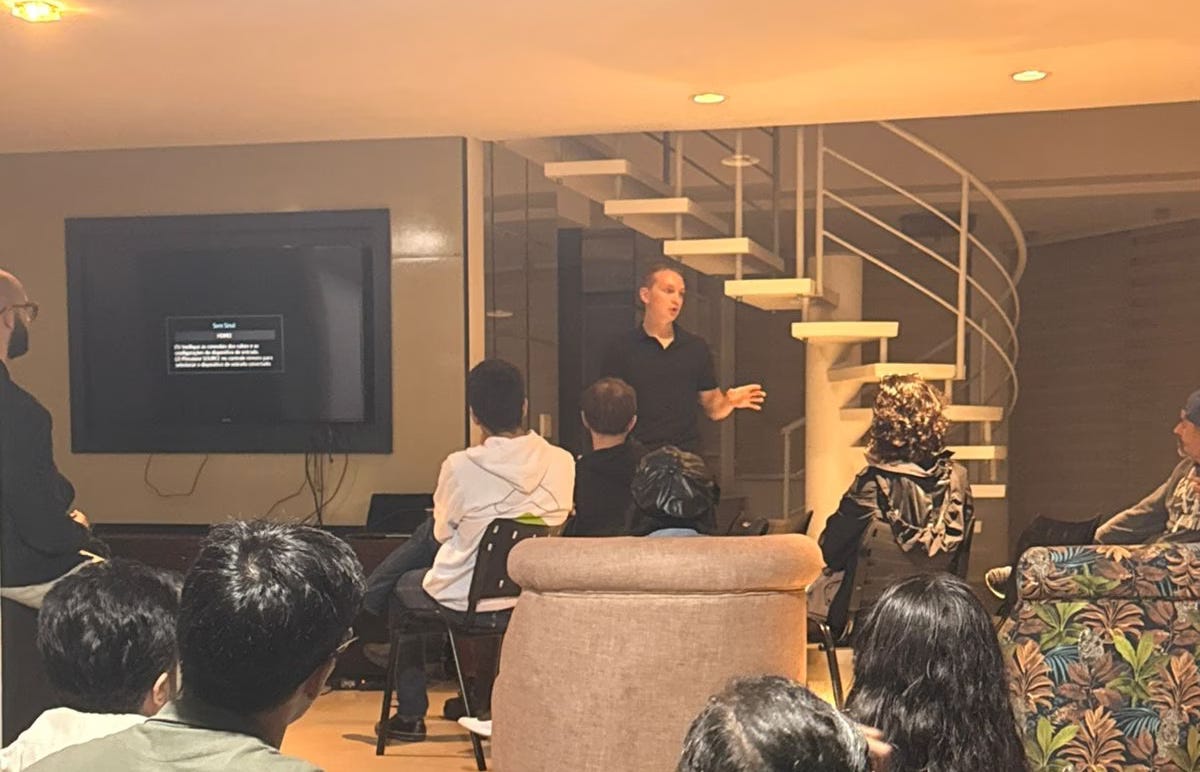
A month after Ipê Village wrapped in late April, the community reunited on May 28 in Florianópolis. The gathering drew 30 to 40 people, some new to the ecosystem, with Jean Hansen opening to introduce Ipê to newcomers. Roman from Valar Group then ran a deep workshop on Zcash and zero-knowledge proofs, walking through how to keep money anonymous and fielding sharp questions on private payments.
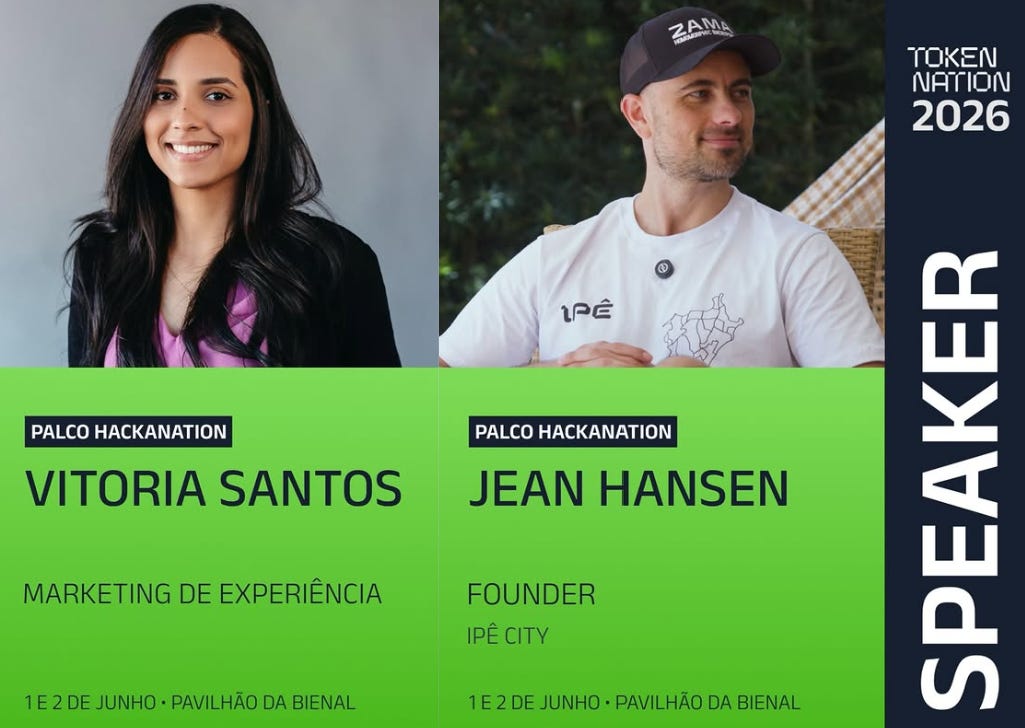
Right now, on June 1 and 2, TokenNation, Brazil’s Web3 and tokenization conference, runs at the Pavilhão da Bienal in São Paulo, with Jean Hansen and Vitoria Santos on the ground for it. This is a quick preview; a full recap of their talks on network states and onboarding women into Web3 lands in the next edition.
🏫 Learning
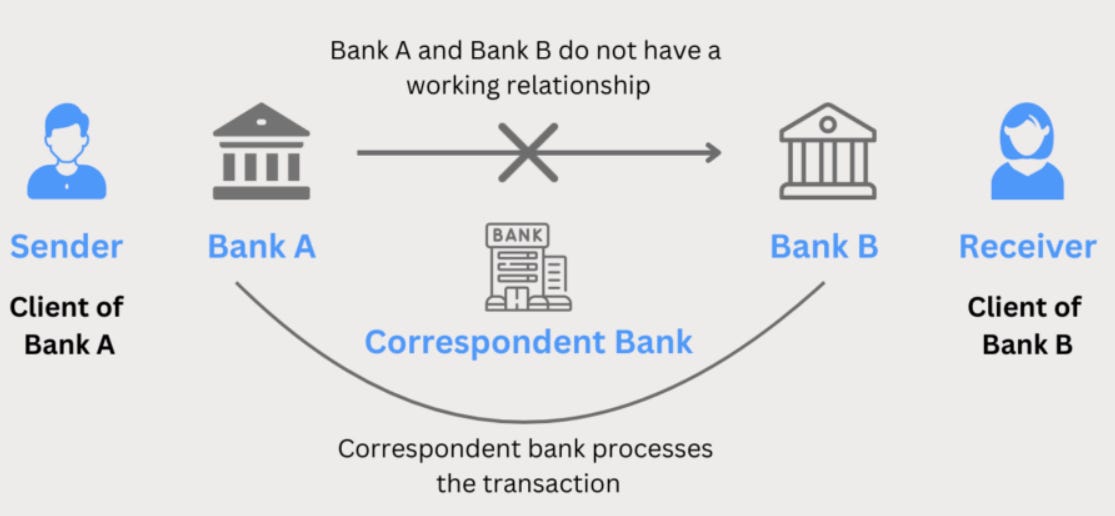
Picture sending $200 to your family in another country. In the world of fiat, the government money, this is not instant and direct. Your bank may have no branch on the other side, so the payment travels through a relay of banks and the trip can take days.
That relay is conventional correspondent banking. Your local bank keeps an account at a larger bank abroad, that bank keeps an account at another, and your $200 hops down the chain until it reaches the recipient’s bank. Every hop adds a fee and a delay.
The deeper problem is when a whole country starts to look risky or expensive to vet, big banks do not screen each client one by one. They abandon the entire corridor, a practice the Financial Stability Board calls de-risking. The number of these banking links has fallen roughly a quarter since 2011, and some small nations have lost between forty and seventy percent of theirs. A freelancer with clean documents can still be turned away, because the conventional system reads the passport, not the person.
This is the gap stablecoins were built to close. A stablecoin is a digital token pegged to a currency like the dollar, moving on a shared ledger that any wallet can reach without asking a chain of intermediaries for permission. The transfer itself settles in seconds and costs almost nothing, and the only real expense is converting in and out of local cash at each end.
🌐 Network Societies Update

The Funkhaus, on the eastern bank of the Spree, was built in the 1950s to broadcast East German state radio across the block. From June 13 to 22, that same brick complex will host Futura Camp and ZuBerlin, a ten-day curated residency that treats co-living as the format and conferences.
The setup is closer to a temporary village than a summit. Residents apply through app.futura.camp and end up sharing studios on the Funkhaus campus while programming runs on layer-2 design, privacy infrastructure, and what the organizers call future-society experiments. Sessions overlap with the wider Funkhaus calendar during Berlin Blockchain Week, so the line between resident, speaker, and visitor stays porous on purpose.
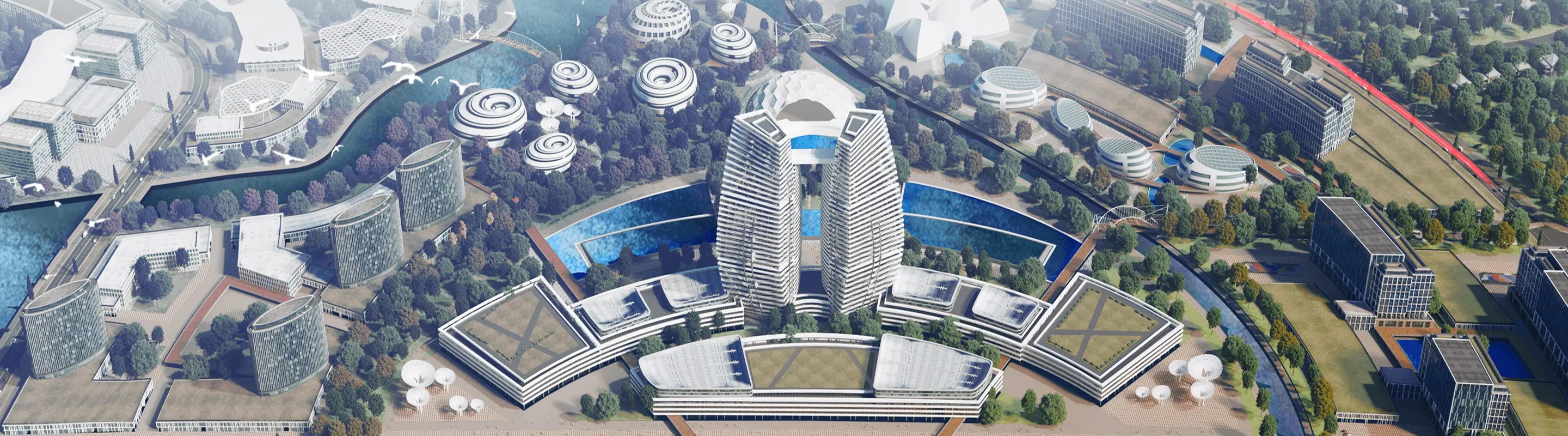
On May 19, a Joby air taxi lifted off near Almaty on a demonstration flight. In Alatau it reads as more than a press cycle. From July 1, this zone on Kazakhstan’s southeastern edge runs under a special legal regime written into the constitution, and the flight sat inside its sandbox for autonomous transport.
The regime borrows the parts of offshore finance founders recognize. Disputes go to the Astana International Financial Centre or international arbitration, contracts can run on English common law rather than Central Asia’s civil codes, and permitting passes through one municipal authority that Deputy Prime Minister Kanat Bozumbayev calls a body free to outpace province-wide reform. Officials add sandboxes for AI, robotics, and digital assets, and count about 53 projects and US$4.2 billion.
🛠️ Parallel Institutions
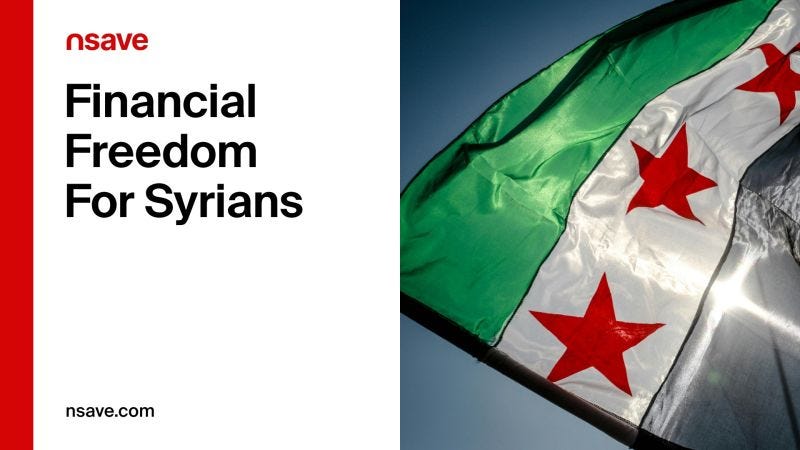
nsave opens a private dollar corridor into Syria #Parallel Currency
For a decade a Syrian passport was enough to get a bank account declined before anyone read it. Correspondent banks withdrew, remittance routes thinned or grew costly, and the people paying for it were rarely the ones any sanction was meant to reach. Freelancers and families sending money home were shut out for where they lived.
nsave, a UK fintech backed by Y Combinator and Sequoia, opened its Syria corridor on May 15 in two stages, inbound transfers into the country and international USD, EUR and GBP accounts for residents. It runs its own compliance and sanctions screening beside its partner banks, so a customer’s country no longer ends onboarding. Deposits can arrive as stablecoins, USDC, USDT and others across Ethereum, Solana and Stellar, settling as a dollar balance. The founder, himself Syrian, calls this exclusion by passport rather than risk. What he built is the screening the banks walked away from, rebuilt as a regulated rail that keeps the door open and prices the risk on its own books.
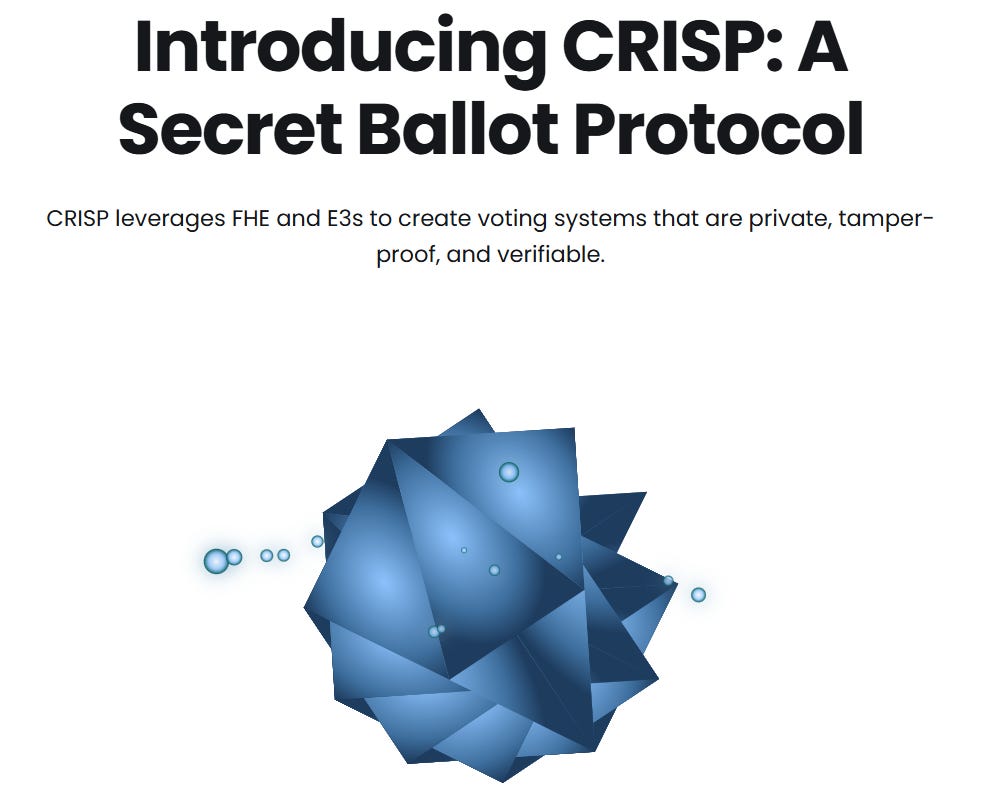
CRISP Brings Secret Ballots to On-Chain Governance #Parallel Governance
Every DAO vote lands on a public ledger, tied to a wallet anyone can read. A holder who answers to an employer or a delegate cannot vote one way and claim another. Transparency was meant to keep voting honest; instead it hands quiet pressure a receipt.
CRISP, released in May by Interfold (formerly Enclave), takes that receipt away. Ballots are sealed with fully homomorphic encryption, so compute providers tally them without seeing the votes. Ciphernodes use threshold cryptography to reveal only the result, and zero-knowledge proofs let anyone confirm the count. No token, the code is open, and a live demo runs at crisp.enclave.gg, with Aragon OSx next.
Private voting is not new; MACI and Shutter got there first. CRISP insists on receipt-freeness, so even a willing voter cannot prove a choice to a boss or a buyer.
🌍 Other Interesting News
In Colombia, picking up envelope cash can mark displaced families for armed groups. Mercy Corps Ventures and Aleo are piloting the first humanitarian use of USDCx: ~300 people get paid over WhatsApp and prove eligibility with zero-knowledge proofs without exposing who they are.
For eighty years, Erdős problem 90 asked a simple question: among n points in the plane, how many pairs can sit exactly one unit apart? The square grid looked like the best anyone could do. Late last month, OpenAI reported a counterexample from a general-purpose model, and Daniel Litt called it the first autonomous AI result he finds interesting on its own.
Google DeepMind answered with volume. AlphaProof Nexus, on arXiv May 21 and via Kurate, closed nine more Erdős problems with proofs checked in Lean. One lab broke a famous conjecture; the other cleared a backlog by making proof search the product.
💡 Join Ipê City Community
Follow the journey and join the community on Telegram.