
Ipê News #38 - Ipê Village Grants Winners, Cryptographic Provenance and Gelephu's Banking Stack
Your weekly update on what is happening in the Startup Society ecosystem.
Hey builders! Welcome to the 38th edition of Ipê News.
🏘️ Community Updates
Seven projects took home grants at the May 16 Town Hall, the closing session after Ipê Village’s second edition. To get the milestones, the architects must ship on the Ipê Protocol stack and reach ten monthly active users with real transactions.
🥇 Best Builder — @iggynore · Ipê Hub
Prize: one month at Network School, flights included.
The digital home for Ipê City: passport, governance, on-chain coordination, and AI agents in a single app. Infrastructure the village actually runs on.
🔒 Best Privacy Onchain App — @mihkel461 · Ipê Protocol
$1,000 + $500 milestone-based.
A full governance stack with FHE-encrypted ballots sealed end-to-end. Eight protocol layers, one canonical primitive each. Running on Sepolia today.
🤖 Best AI App — @StefMastella · Ipê Mind Tree
$700 + $500 milestone-based.
An institutional memory layer that connects Obsidian-based knowledge, AI agents, and on-chain coordination so community context stops scattering across chats and docs. The Village booklet drops May 28, assembled through Mind Tree.
🗳️ Most Impactful Civic Project — Kauã · Veritas Public Spending
$500 + $250 milestone-based.
A platform pulling from multiple official Brazilian open data sources to give the public real visibility into how government money gets spent. Close to a public release.
🤝 Best Social App — @dayonx × @iggynore · IpêXchange
$500 + $250 milestone-based.
A coordination layer that turns the city into a barter and trade network. Multi-hop AI computes circular trade loops between residents. The Jurerê demo is live; real citizen listings are the next step.
🏘️ Best Real-World Solution — @gabrielmachadorosset × @iggynore · Veritas HOA Governance
$500 + $250 milestone-based.
Digital voting for a real residential community on Rootstock/RSK: NFT deeds, quadratic voting, and an off-chain path for residents who do not manage wallets. The first EP build with an external client in Veritas Village.
📡 Physical Infrastructure — @muchwin · Ipê Connect
$500 + $250 milestone-based.
A crypto-native eSIM marketplace. Pay in USDC or ETH, activate by QR in under a minute. No credit card, no KYC, no carrier lock-in.
Ipê Village Town Hall: Second Edition Recap
The May 16 Town Hall wrapped up the second Ipê Village with the full picture. Over 500 people came through, up from 170 the first year, across 35 events, 20+ workshops, and 20+ scholarships. Eight sponsors supported this edition, with sponsorship revenue 600% higher than the first run. Jean was clear: Ipê has to become self-sustaining, because the value proposition only works if what members pay or sponsors invest comes back to them in something real.
The Token distribution is coming. Every holder gets community tokens weighted by their contributions, with a possible revenue share also on the table for 2026. Milestone bonuses for grant projects require Ipê Protocol integration and 10 monthly active users.
The members also started discussing a Network School trip in late September or early October.
Mihkel mentioned that Franz, a builder in Argentina, is already interested in running the Ipê Protocol stack for his own city project, which would be the first sign the infrastructure travels outside Ipê.
In May 28 meetup in Florianópolis at 6pm, and a São Paulo dinner on June 1 alongside Token Nation.
🏫 Learning

The standard way to prove something online is to send the whole document. ID for age, bank statement for rent, passport scan to open an account. The system asks a single question and the file goes along for the ride.
A zero-knowledge proof flips that trade. You generate a mathematical proof that the statement is true, and nothing else travels with it. Uma Roy, CEO of Succinct, uses the bouncer at the door as the canonical example: instead of showing a driver’s license, you present a proof of age. Birthday, address, and document number stay on the phone. The same math works for showing that you earn above some threshold without revealing the number, or that you hold a given residency without handing over the passport.
With Succinct’s SP1, a developer writes ordinary code, runs it inside the prover, and gets back a compact record that the computation ran as claimed. Blockchain rollups were the first place this had to scale.
What changes is the inversion. Instead of sending the file, you send the answer. The rest of this edition picks up the same question in other places where the document used to be the only proof anyone had.
🌐 Network Societies Update

In southern Bhutan, Gelephu Mindfulness City is testing whether a special economic zone can hand a firm its license and its bank account in the same envelope. Most zones cannot. A regulated entity arrives with paperwork in order, then loses months looking for a counterparty willing to open accounts under the new jurisdiction.
GMC’s fast-track route applies to firms already authorized in Singapore, Abu Dhabi Global Market, or Hong Kong. They submit one application for a GMC financial license and a DK Bank account, processed together. “Our ambition is simple: to be the most Web3- and fintech-friendly bank in the world,” said DK Bank CEO Yu Dong Zheng. Accounts run in nine currencies, with zero corporate tax at qualifying investment tiers, no capital gains or dividend or inheritance tax, and foreign talent exemptions in place through 2030.
Day-one banking is exactly where competing zones tend to slip, so the test for GMC is the first cohort, not the brochure.
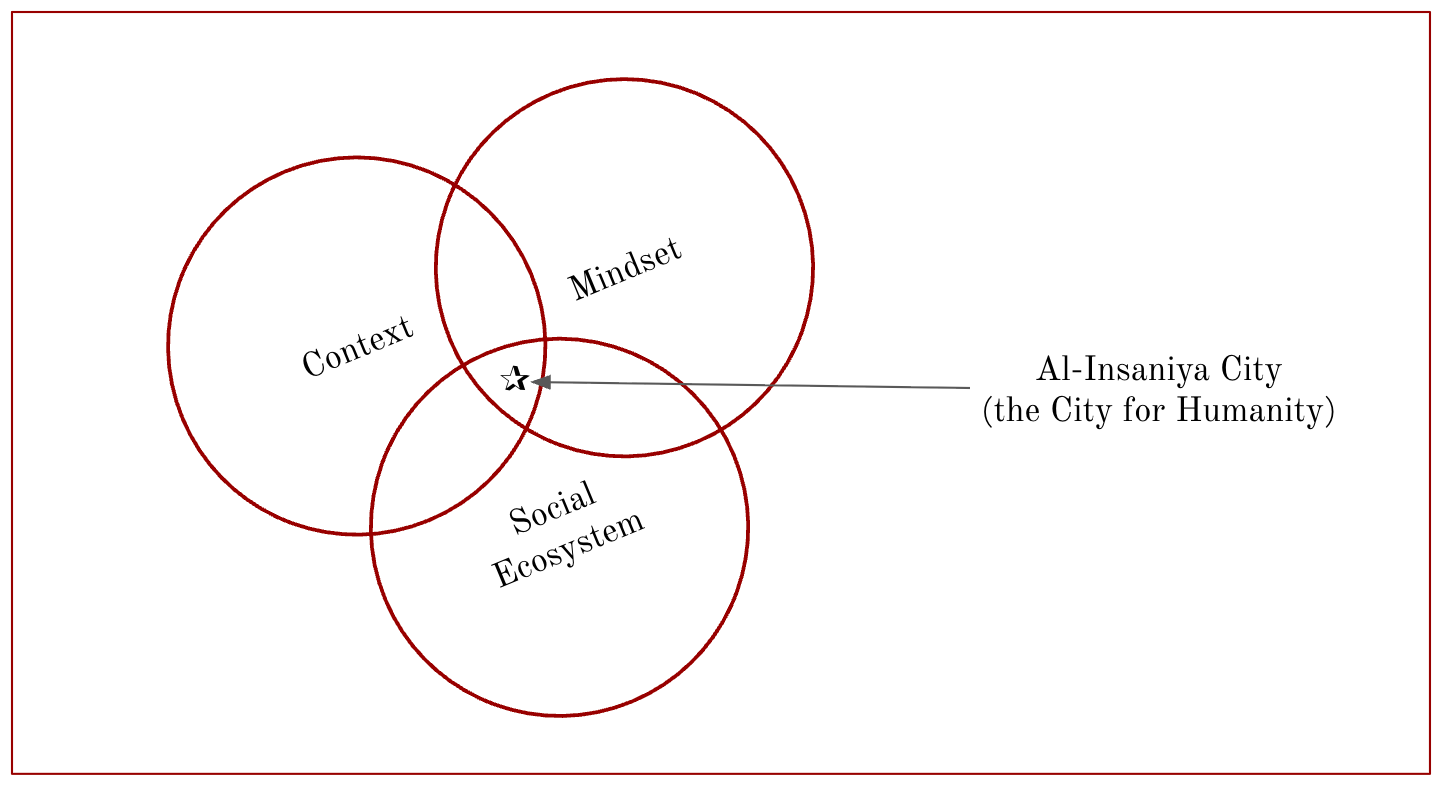
We write a lot about what network states plan to build. But what do the people starting these cities actually want? Their personal context, mindset, and social ecosystem shape why someone starts a city in the first place.
Eduardo de Barros catalogs 27 historical examples, from Poundbury (Charles III’s insistence on designing for people rather than cars) to Tel Aviv (Herzl’s vision of a model city for a stateless people) to NEOM (whose founding intent remains genuinely unclear, which is itself a diagnostic). The through-line is that founding intention shapes a city’s character in ways that governance structures and legal frameworks don’t fully capture.
The piece offers a personal framework across three axes: context, mindset, and social ecosystem. De Barros maps his own intentions across each one. Living founders in the list include Balaji Srinivasan, Vitalik Buterin, and the Próspera team, treated as prompts rather than verdicts. The invitation is to do the same exercise honestly, without defaulting to the vision document.
🛠️ Parallel Institutions
Succinct Bets on Proving What’s Real as AI Detection Collapses #ParallelInstitutions
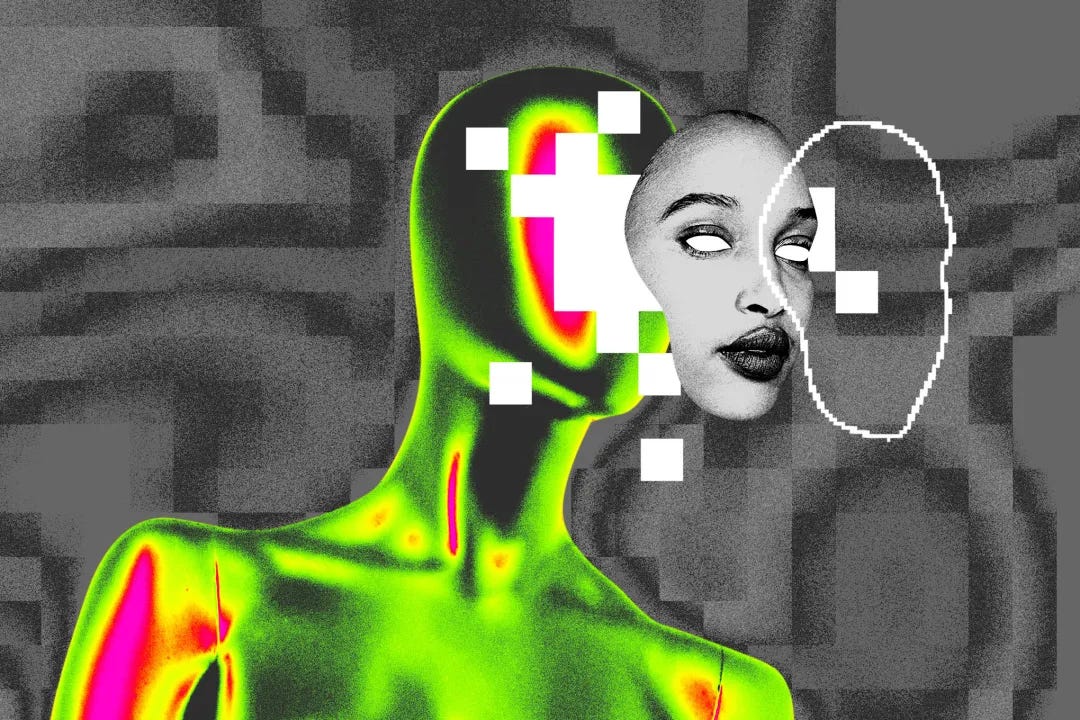
The assumption behind AI image detection has always been that synthetic images leave traces, and that a well-trained model can find them. Succinct’s AdversIm benchmark ran that assumption through leading commercial detectors. On clean AI-generated images, three systems scored 98%, 90%, and 90% accuracy. After applying slight blurring, mild noise, and JPEG recompression, changes a human reviewer would not notice, those same numbers dropped to 36%, 11%, and 13%.
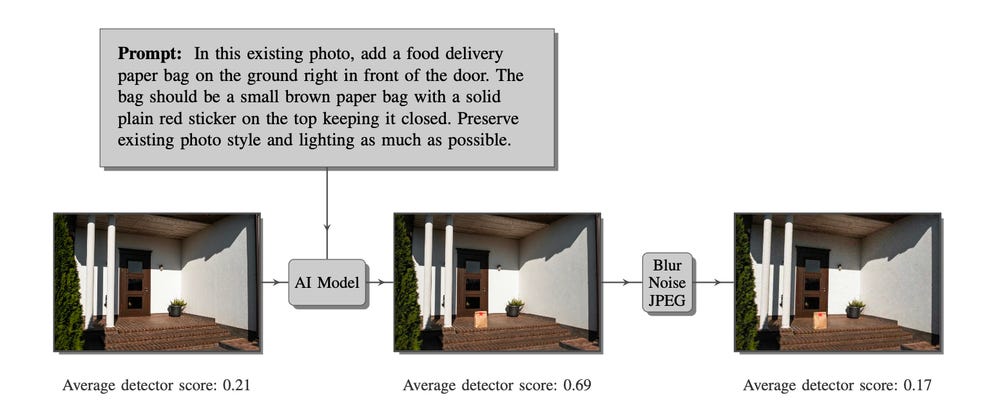
Generative models are trained to minimize the statistical distance from real images, so any detector built on that distribution is always chasing a target it helped define. ZCAM cryptographically signs raw sensor data as it enters the device, binding content to a specific hardware key, time, and location before any edit occurs. The Base+SP1 integration extends this to computational provenance more broadly, using ZK proofs to verify claims about arbitrary processes without re-examining the output. Post-hoc detection asks what looks fake; cryptographic provenance asks what can be proved at the source.
Canon’s EOS R1 and R5 Mark II now embed C2PA credentials at capture: a provenance record that travels with every file through editing, publication, and eventual display. Reuters integrated it into its editorial workflow before the public rollout. Canon is now extending the program to other news organizations.
Adam Mosseri framed the same from the platform side: fingerprinting real media is more practical than tagging fake, because manufacturers can sign images at capture, building a chain of custody independent of detection. He also flagged a cultural shift: as AI floods feeds with polished content, raw images with visible imperfections start reading as authentic. The flaw starts to read as proof. If detection collapses under light compression, capture-time credentials and platform policy may matter more than any post-upload classifier.
🌍 Other Interesting News
Rx Inspector Maps 40,000 Generics to the Factories Behind Them
ProPublica’s Rx Inspector maps around 40,000 generic drugs to the specific manufacturing facilities that produce them. For each medication, you get the production site, its inspection history, and any regulatory flags from watchdogs. Type in a drug name, get back an auditable supply chain without needing to understand the underlying regulatory framework.
The Accuracy Paradox: Optimizing for “Correct” Can Erode the Thing It Measures
A working paper from CREATe at the University of Glasgow argues that the regulatory response to AI hallucination has narrowed onto one metric: accuracy. The EU AI Act, the GDPR, and national data authorities all use it as the dominant proxy for trustworthy AI, and more than 80% of legal-LLM studies surveyed rely on it as the main measure.
Seeing and Imagining Run on the Same Neurons
A study published in Science by researchers from the Simons Collaboration on the Global Brain and Cedars-Sinai recorded from nearly 1,000 individual neurons in the ventral temporal cortex of 16 epilepsy patients with implanted electrodes. Patients were shown 500 images of everyday objects, then asked to imagine a subset. Nearly half of the neurons that responded to seeing an object also fired when the patient only imagined it — with enough fidelity that researchers could reconstruct fine visual details of what was being pictured from the neural signal alone.
💡 Join Ipê City Community
Follow the journey and join the community on Telegram.