
Ipê News #36 - Ipê Village Demo Day, Korea's Startup Cities and Conviction Voting
Your weekly update on what is happening in the Startup Society ecosystem.
Hey builders! Welcome to the 36th edition of Ipê News.
🏘️ Community Updates
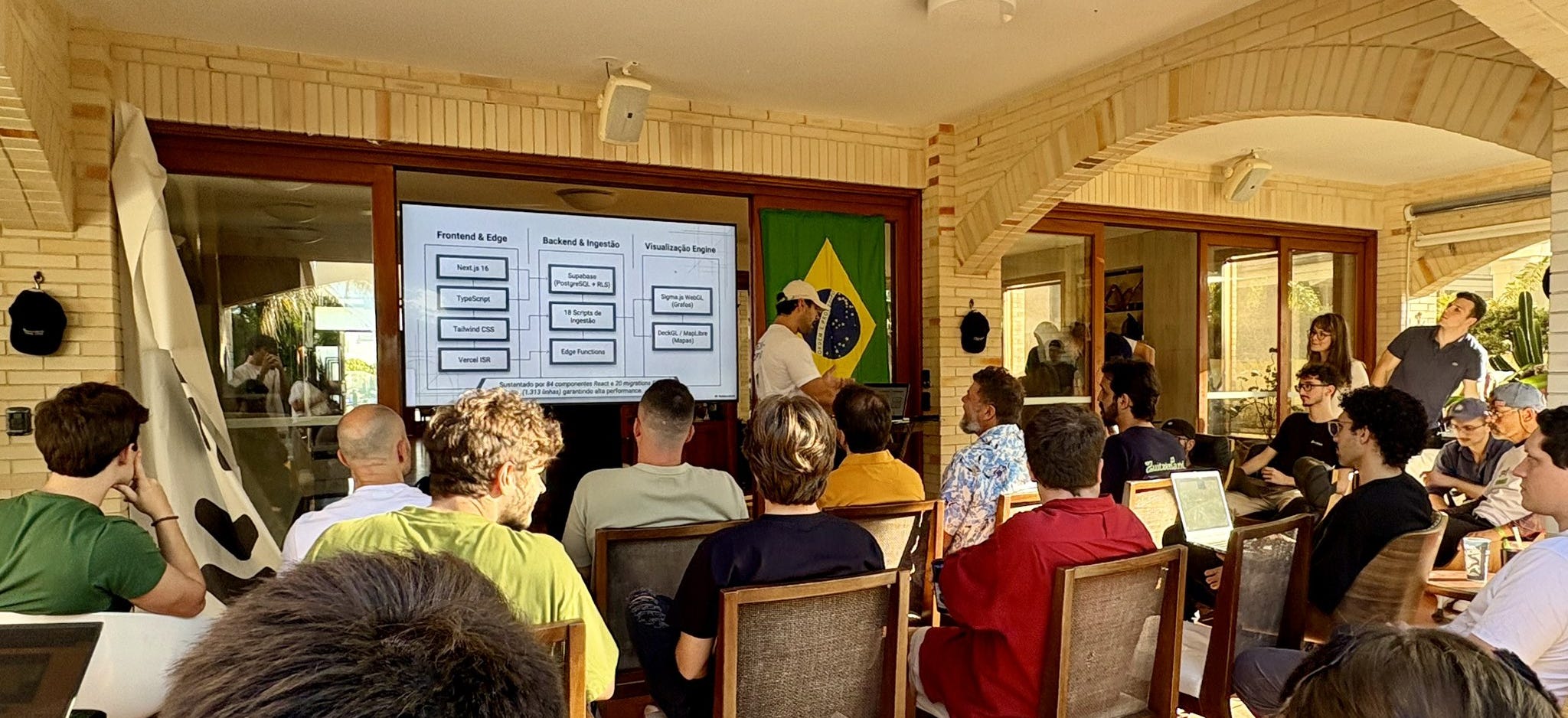
The Ipê Village 2026 popup ran in Florianópolis from April 6 to April 30 in Jurerê Internacional, almost four weeks of co-living and building anchored to one beachfront hub. Demo Day landed on the closing day, April 30, and slid straight into the wrap party that the village had been pointing toward all month.
The night ran on two very different rhythms. Chorinho opened it, the Brazilian instrumental tradition that swings on flute, cavaquinho, and seven-string guitar. Ecstatic dance followed, the shoe-free freeform format that runs heavily in Floripa’s conscious-movement scene, with a DJ holding a long arc while dancers move without talking.
The grid this edition runs to twenty-four builds. Daniel Gorgonha brought Ipê Store and Valocracy Platform, iggynore shipped Ipê Hub, stefmastella demoed Ipê Mind Tree, and Jean kept the underlying Ipê Platform moving as the passport-and-points layer for everyone else. Governance and voting experiments came from gabrielmr714 with Veritas HOA Governance and Ipê AI Judge, from robiomarine with Veritas Village DAO, from cami with Polaris, and from decode with Ipê Protocol. On the exchange and commerce side, Dayon X presented IpêXchange, robertoluisgallardo brought Token Point, and Arthur Salmoria demoed IpeSign as a signature layer. Pedro Gimenez covered the connectivity stack with PIM, Proximity Internet Mesh.
Education ran through Dieg’s SovEd and UNI’s UNI LINGUS, wellbeing surfaced in Eric’s Healthy Founder Club and SantiagoLigorio’s MetaGarden, and DeSci showed up as robiomarine’s Pepo The Polyp. The creative and AI track gathered Andrius’s text-to-video work in Wabisabi, solsiete.eth’s Shine, and Ernesto’s SecureMyVibe for vibecoded app security. Two civic builds with public URLs still pending close the grid, Civic Intelligence Platform by Luis Felipe Fabiane and Flood Monitoring: Risk Prediction by ArthurV.C. Full cards and status for every project live at Ipê Projects.
🏫 Learning

Imagine your DAO treasury as a stove with several pots simmering. Each pot is a proposal asking for funds. You don’t drop in once a month and pick a winner. You keep one finger on whichever pot you trust, and the longer you hold it there, the warmer the pot gets.
The mechanics are clean. A token holder stakes on a proposal, and that stake’s weight, called conviction, charges up over time toward a maximum following an exponential curve. Pull your support and the conviction drains at the same rate. Each proposal has a passing threshold tied to how much money it asks for, so larger requests need larger sustained backing. Michael Zargham wrote the first version during an all-nighter in Zug in July 2018, and Commons Stack carried it into production a year later.
The honest objection is speed. A community on fire cannot use this for an emergency. What conviction voting does kill is the snapshot whale, the actor who shows up at the last minute with borrowed liquidity to swing a vote. You can see it live in 1Hive Gardens on Gnosis Chain and in Token Engineering Commons with a seven-day half-life. Communities stop asking who wins this week and start asking who has been right and present long enough to deserve the funding.
🌐 Network Societies Update

The 2026 edition of Edge Esmeralda runs from May 30 to June 27 in Healdsburg, California, an hour and a half north of San Francisco in a corner of Sonoma County better known for vineyards than for city-building. Inside that popup village, Timour Kosters announced on March 5 the return of the Long Journey Residency, this time with a fully sponsored cohort of thirteen founders living together for the full month, housing and meals covered.
Long Journey describes itself as a pre-accelerator for what it calls “magically weird” founders, the early-stage bets that don’t slot easily into a standard accelerator track. Plugging that cohort into Edge Esmeralda turns the residency into a small lab inside a larger one. Thirteen residents settle in alongside hundreds of builders and Esmeralda Institute participants who are rehearsing a permanent city in the same valley. Tickets and scholarships for the wider village run through tickets.edgeesmeralda.com, and the Edge Esmeralda site holds the current programming map.
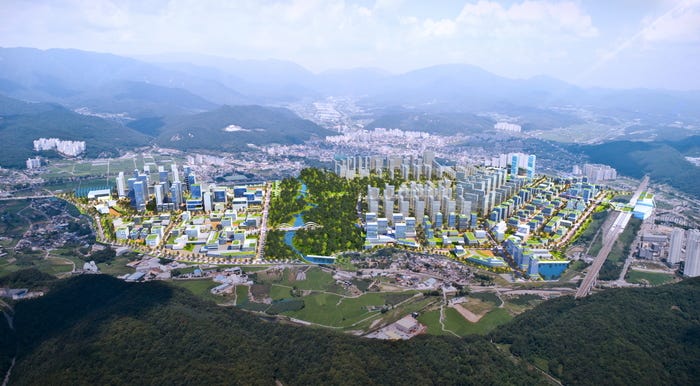
On April 24, the central Korean government named four anchors outside the capital. Daejeon, Daegu, Gwangju, and Ulsan are now the first batch of national startup cities, each tied to a research university and to a slice of the industrial map: robotics in Daegu, AI and energy in Gwangju, mobility in Ulsan, and a science-tech base in Daejeon.
Approval timelines compress inside each hub, the regional growth fund scales toward two trillion won by 2030, and the path runs to ten hubs by 2027 with five Korean cities in the global top one hundred by decade’s end. Korea JoongAng Daily reads it as deliberate diversification of the ecosystem rather than a parallel Seoul.
The four-city bet is that anchoring approvals, university pipelines, and a dedicated fund inside each location will hold founders long enough for second-tier hubs to reach escape velocity, though Korea’s rail network makes it easy for a winning team to drift back once a Series B closes.
🛠️ Parallel Institutions
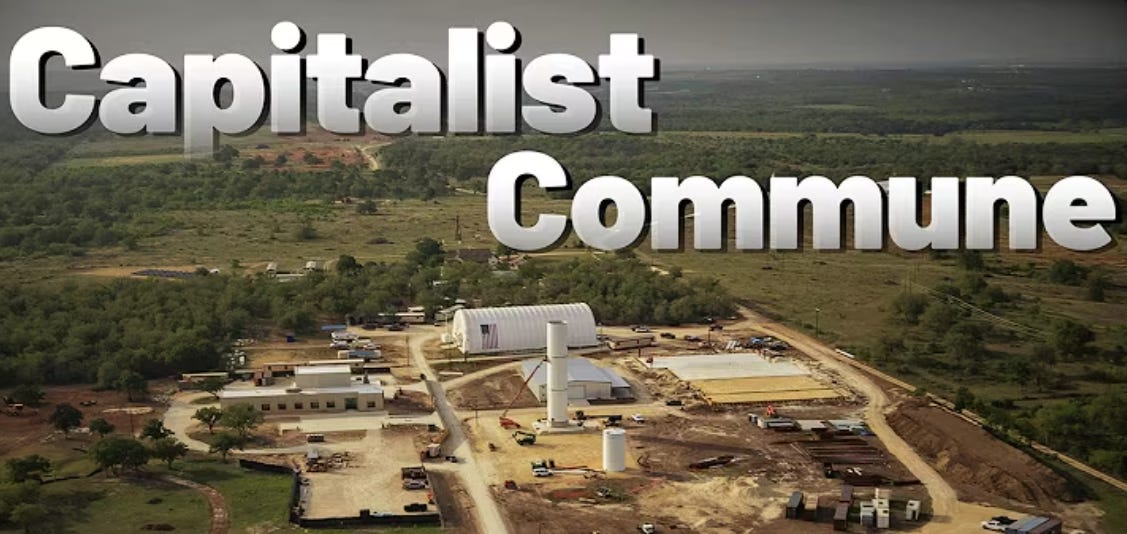
American hardware founders have long juggled expensive land, slow permitting, and isolation from peers who can weld at 2 a.m. A 12,200-acre ranch in Lockhart, Texas, halfway between Austin and San Antonio, is testing whether those constraints can loosen at once. The compound is Proto-Town, and Ashlee Vance’s recent video gave it its first outside camera crew. Founders Josh, Merl, and John host resident teams working on solar-driven cooling, centrifuge desalination, autonomous excavation, and on-site nuclear isotope research through Oklo, with pioneers sleeping in ConX trailers next to their machines.
Where the Keystone factory consortium above ties seven R1 universities to state procurement, Proto-Town runs on a much lighter institutional layer. The land is privately held with permissive rules and no formal application process, and the community has been curated through proximity and shared work. The founders cite Detroit, Los Alamos, and Shenzhen as references, an ambition that earns out only if the resident bets actually ship.
🌍 Other Interesting News
Vitalik’s April Build for a Self-Sovereign LLM Stack
Vitalik Buterin published in April his current setup for running language models locally without giving up the conveniences of hosted AI. The post walks through the model and operating system, the sandboxing that isolates the agent from sensitive files, and a daemon that pauses any outbound message until a human approves it.
The interesting move is the threat model. He flags third-party “skills” the way a security engineer flags npm packages, treating each plugin as a potential channel for prompt injection.
Beeple’s “Regular Animals” Brings Robot Dogs to Berlin’s Neue Nationalgalerie
The Neue Nationalgalerie opened “Regular Animals”. Inside a fenced enclosure, autonomous robotic dogs wear hyper-realistic silicone heads modeled on Musk, Zuckerberg, Bezos, Warhol, and Picasso. Each dog photographs the room, runs the image through an AI tuned to its assigned ideology, prints the result, and ejects it to visitors.
The piece is built as an allegory of how platforms metabolize meaning. A reader who has just spent this issue on conviction voting, on startup cities, on self-sovereign LLMs may notice that Beeple is staging the same argument inside a museum.
💡 Join Ipê City Community
Follow the journey and join the community on Twitter or Discord.