
Ipê News #35 - The Canton Principle, Frontier Tower, and Ipê Village Week 3
Your weekly update on what is happening in the Startup Society ecosystem.
Hey builders! Welcome to the 35th edition of Ipê News.
🏘️ Community Updates
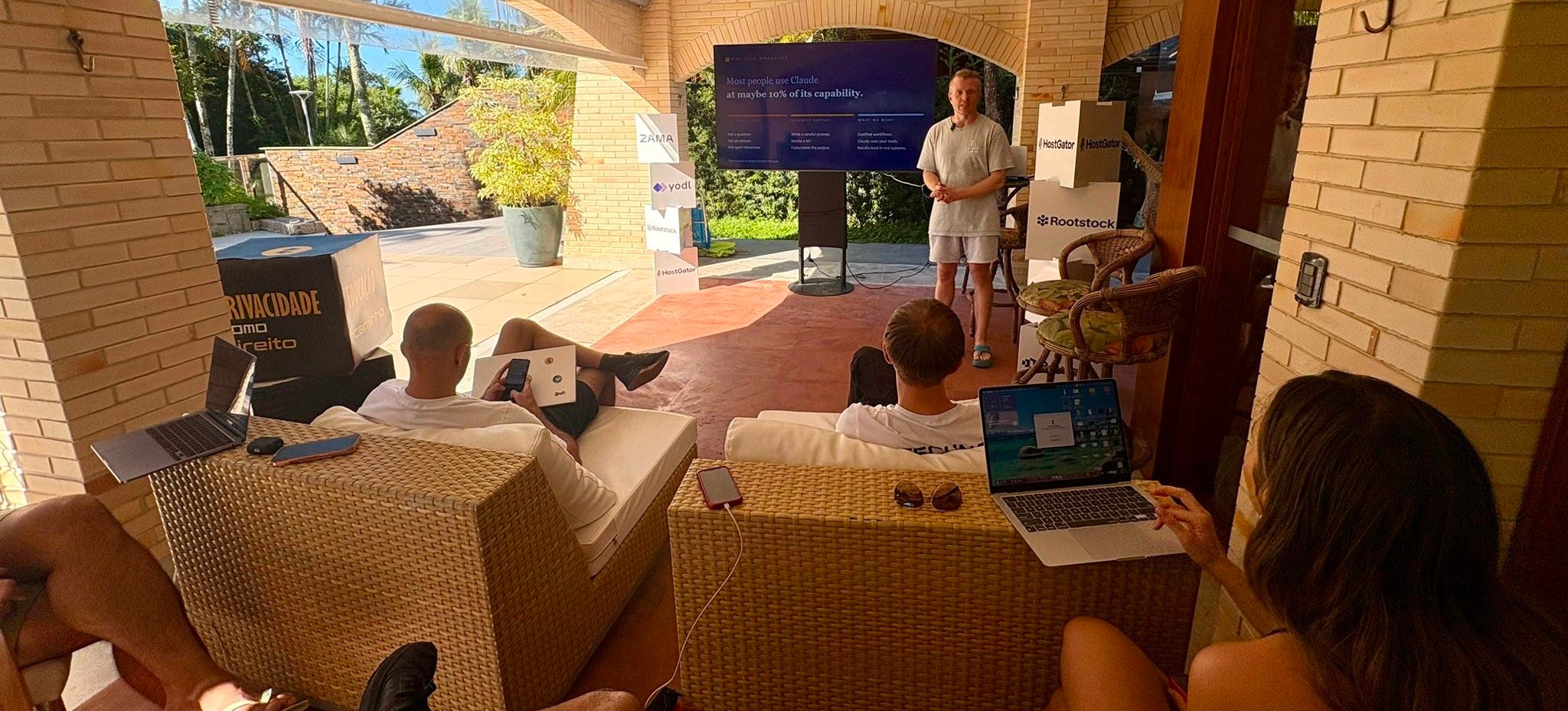
From KYA to Artizen House: Community Workshops That Shifted the Ground
Week 3 inside Ipê Village ran two arcs at once. Privacy House wound down its programming while Artizen House was being prepared for the same physical block, and four community workshops marked the handover on the ground.
Vocdoni ran a workshop on coercion-resistant onchain voting, where the team showed how liquid democracy can hold even under social pressure. Luna brought Billions Network into Privacy House one last time, walking residents through the KYA framework. Where Know Your Customer was built to verify humans for banks, Know Your Agent is designed to verify both humans and autonomous agents for onchain systems, using zero-knowledge proofs as the backbone.
Marina led a session on careers for tech optimists, using the Ikigai frame to map the Web3 transition through the overlap of what people love, what they do well, what the network needs, and what it will pay for. Mikhail Savchenko, founder of INITE, hosted the Claude Workshop at IA House, moving beyond basic prompting into operational agent workflows.
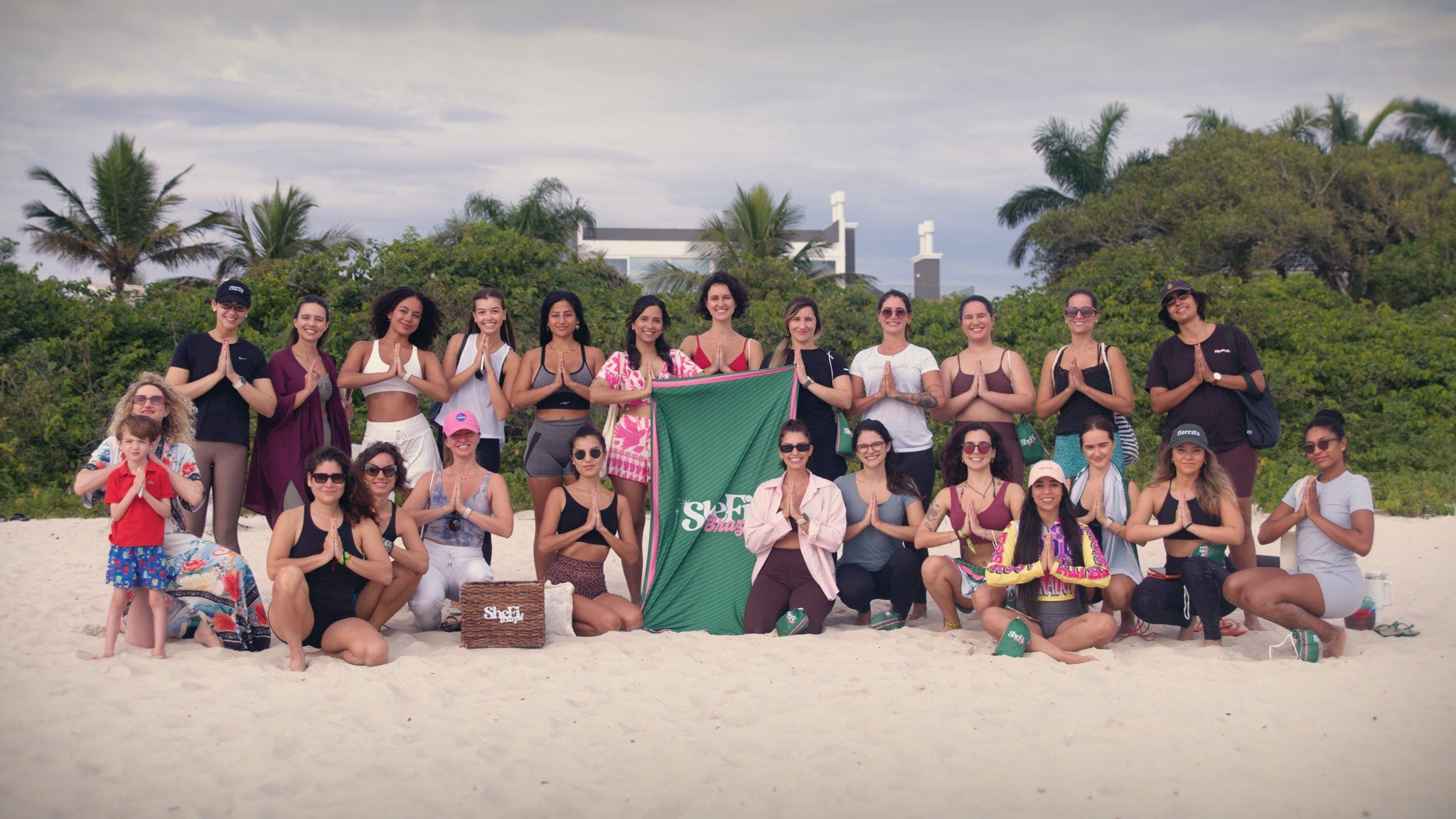
SheFi Brasil Yoga & Brunch Adds an Embodied Layer to Ipê Village
SheFi Brasil, the local chapter of the global Web3 women’s community, held a SHEFI BRASIL YOGA & BRUNCH session inside Ipê Village, powered by Yodl. The morning replaced SheFi’s usual talks-and-happy-hour template with a yoga practice, a shared brunch, and a hands-on walkthrough of Yodl’s payments app, which lets residents spend stablecoins through local QR rails while merchants receive fiat.
Around the village, residents have been building their own wellness layer in parallel. Beach tennis and volleyball matches run informally on the Jurerê sand throughout the week, and ice bath plus sauna sessions have settled into a recurring contrast-therapy ritual. They emerged from the community calendar that the Ipê docs explicitly leave open for residents to fill with workouts, fitness sessions, and pop-up activities.
🏫 Learning
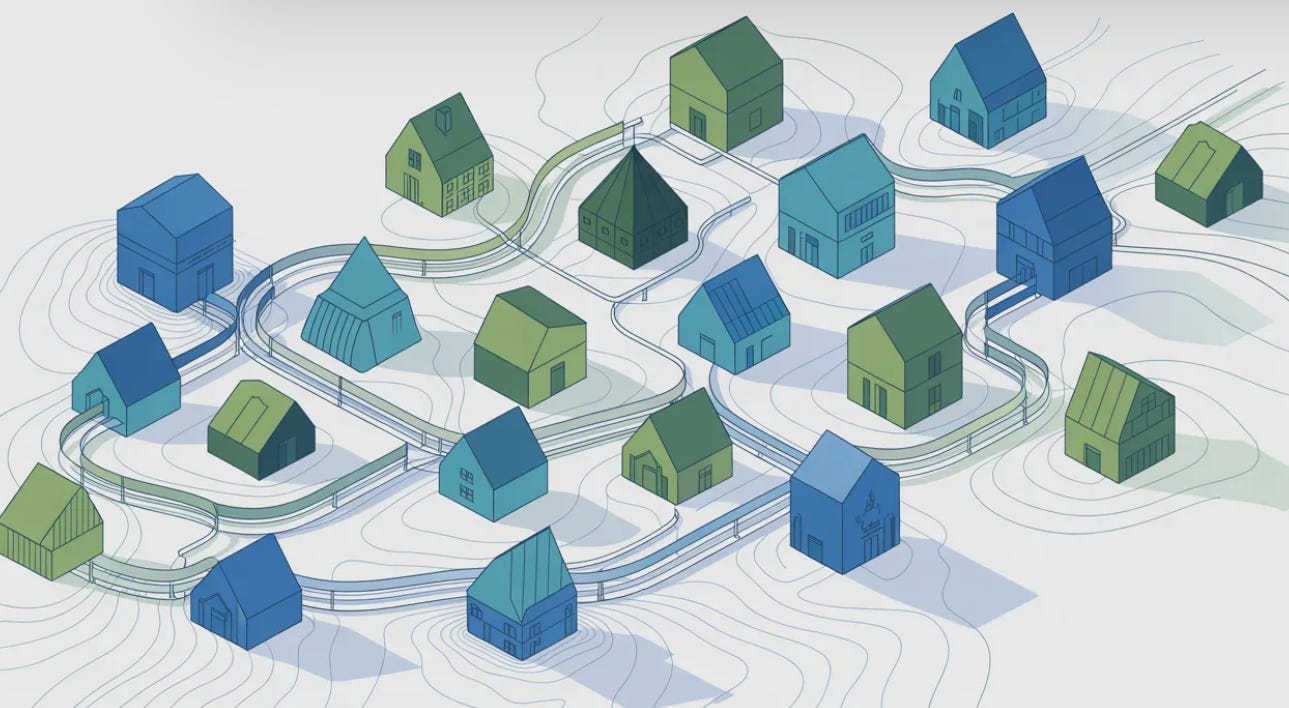
Autonomous Cantons and Subsidiarity: Scaling Houses Without Central Bottlenecks
Most governments work top-down. The center holds most of the power and hands some of it down to states or regions. Anything not handed down stays at the top, and new federal power is often easier to expand than to roll back.
Switzerland inverts this logic. The Cantons hold power first, and they lend specific parts up to the federal layer. Anything not lent stays local, and any new federal power has to be earned through a popular referendum. That is subsidiarity in practice: problems are solved at the smallest level that can actually handle them, and the federal layer only steps in when the local one genuinely cannot.
In a network society, the same rule can take new shapes. A Canton can be a group with enough shared reputation to run its own affairs, like a House, a guild, or a project crew. Reputation travels with each person, so a new House does not start from zero, and if one House fails its members they can move to another.
🌐 Network Societies Update
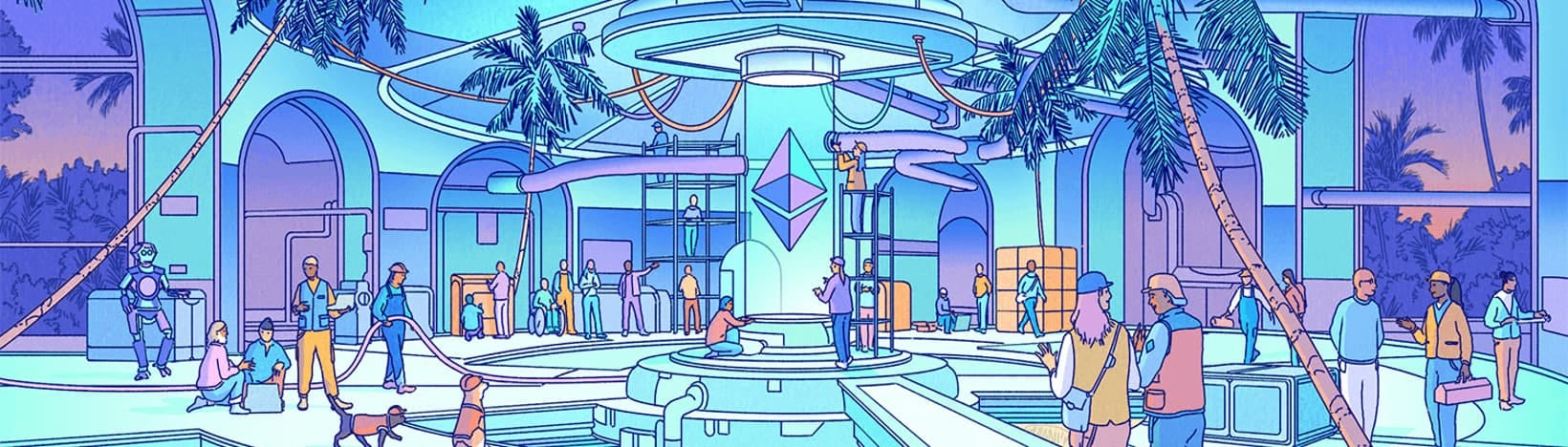
ETH NS Launches a Genesis Month at Network School
Forest City in Malaysia is where Network School has been running a residential proof of concept for the Network State, and in May 2026 a permanent tenant moves in. ETH NS lands as a month-long Ethereum residency, and the opening cohort is treated as the genesis block of a permanent Ethereum node inside the school.
The month is built around five programming tracks that residents move between as work demands. dAI covers decentralized AI, dData handles storage and databases, dApps holds the application layer, and two parallel tracks open space for Art & Culture and Privacy. Alongside the technical tracks, working-group sessions tackle the philosophical layer framed by d/acc, cosmolocalism, network states, and the CROPS acronym for censorship resistance, open source, privacy, and security.

Frontier Tower Positions Itself in the Network Societies Stack
The David Hewes Building has stood at 6th and Market in San Francisco since 1908. In March 2025, Deep Ink Ventures and Berlinhouse bought the empty tower for roughly $11 million and reopened it as Frontier Tower, a self-governed vertical village for AI, crypto, biotech, robotics, neurotech, and longevity teams.
Each 4,250-square-foot floor carries its own theme, with robotics on the fourth, AI on the ninth, the Ethereum House on the twelfth, and a d/acc lounge on the sixteenth. Membership runs $190 monthly or $1,800 yearly for Founding Citizens, and an elected committee drafts house rules for over 450 members.
Frontier Tower is pitched as the first working node in a global mesh of community-governed spaces, with a target of ten towers by the end of 2026 and a hundred by 2027 across Buenos Aires, New York, and London.
🛠️ Parallel Institutions
India’s AIGEG Signals a National Governance Move on AI #ParallelGovernance
In most countries, AI policy is shared between several regulators. India put it in one room. On April 13, the IT Ministry stood up the AI Governance and Economic Group (AIGEG), a single body of ministers and senior officials coordinating AI policy for the country, while sectoral regulators were left out.
AIGEG merges two earlier proposals. The November 2025 India AI Governance Guidelines proposed an AI Governance Group, while the Economic Survey 2025-26 proposed a separate AI Economic Council.
The government does not want a comprehensive AI law unless one becomes unavoidable, and AIGEG is how it plans to coordinate AI in the meantime, with regulators at arm’s length and Innovation over Restraint embedded in the guiding principles. Parliament’s Standing Committee has pushed back and asked the Union to study a proper AI law anyway.

Brazil’s Q1 Crypto Surge Shows a Parallel Dollar Rail Taking Root #ParallelCurrency
Brazil’s cross-border payment system still assumes dollars should travel through regulated banking rails, with IOF taxes built into each step. The Central Bank just reported that Brazilians bought $6.9 billion in crypto abroad during Q1 2026, more than double the same quarter last year.
Over 98 percent of it, roughly $6.8 billion, came from stablecoins, now operating as Brazil’s preferred rail for payments and remittances because they sit outside the tax regime built for fiat.
🌍 Other Interesting News
PerturbAI Releases an 8-Million-Cell In Vivo CRISPR Atlas
PerturbAI launched with a public 8 million-cell brain-wide CRISPR atlas built with NVIDIA and 10x Genomics. The dataset maps thousands of perturbations across living tissue and was released for open use, pushing biotech discovery toward shared data infrastructure instead of closed pipelines.
Singapore Crosses 500 Daily-Updated Geospatial Datasets in GeoJSON
Singapore’s data.gov.sg now offers 500+ geospatial datasets with daily updates and API access, from MRT stations to cycling paths and schools. It is a clean example of state infrastructure being exposed as programmable public rails that builders can actually use.
Wikimedia and OKF Frame Open Knowledge as Critical Digital Infrastructure
Wikimedia Foundation and Open Knowledge Foundation are pushing a policy frame that treats open knowledge systems as critical digital infrastructure, like water or electricity. The proposal asks governments to fund and protect knowledge commons as strategic public assets, not as optional internet extras.
💡 Join Ipê Village 2026
Ipê Village 2026 will be our next large-scale experiment exploring the future of communities, cities, and governance. Hosted in Florianópolis, Brazil, in March/April 2026, this pop-up city is open to founders, builders, creators, and techno-optimists.
Follow the journey and join the community on Twitter or Discord.