
Ipê News #34 - Second Brains, AI Jury and Ipe Village Week 2
Your weekly update on what is happening in the Startup Society ecosystem.
Hey builders! Welcome to the 34th edition of Ipê News.
🏘️ Community Updates
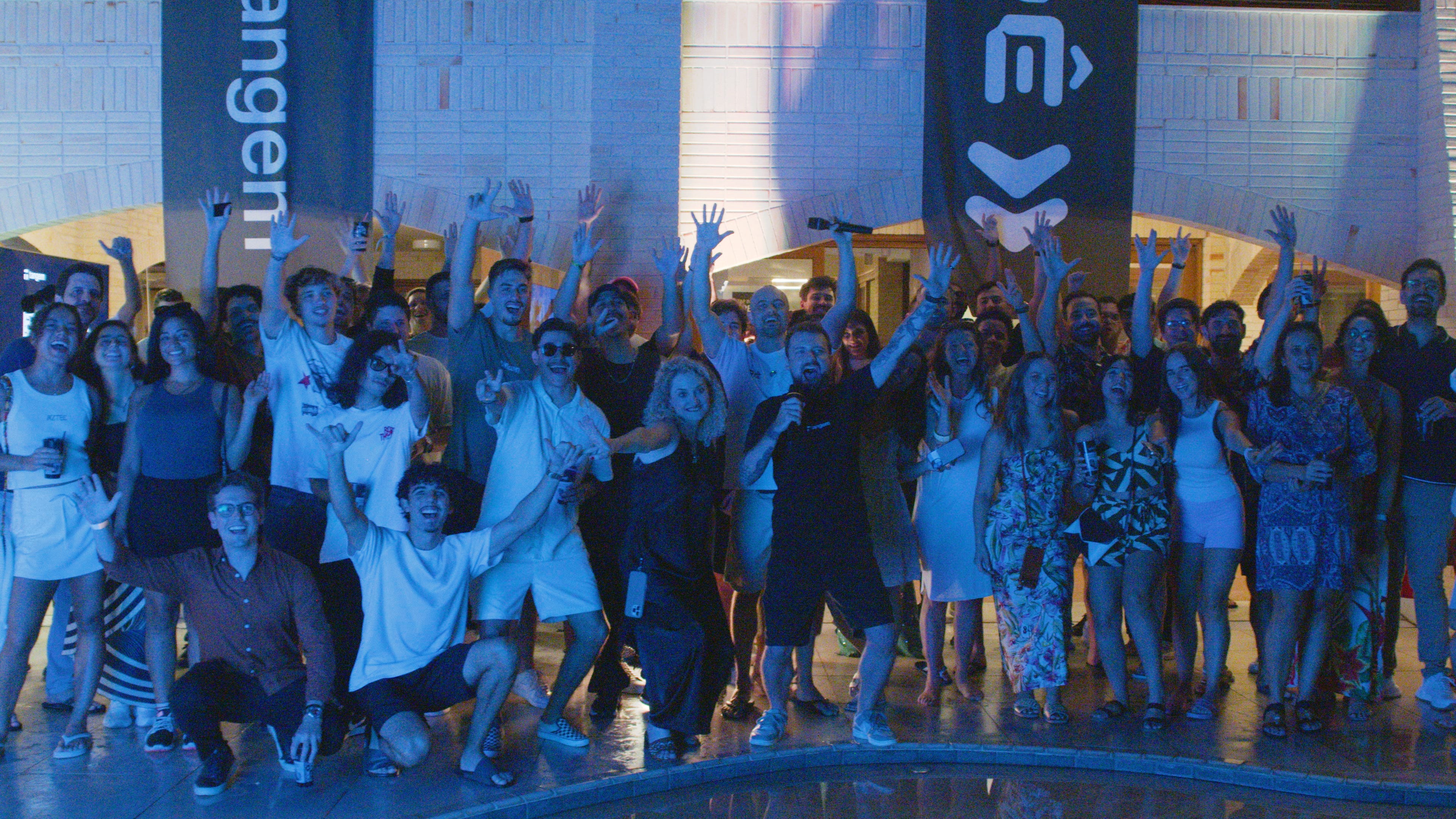
After two weeks of hacker-house sprints, keynotes, and conferences, the Village traded slides for water. Tangem, the hardware wallet maker, hosted a pool party inside Ipê Village with open bar, burgers, and three DJs running from sunset into the night. Residents and friends of the city were invited to simply show up.
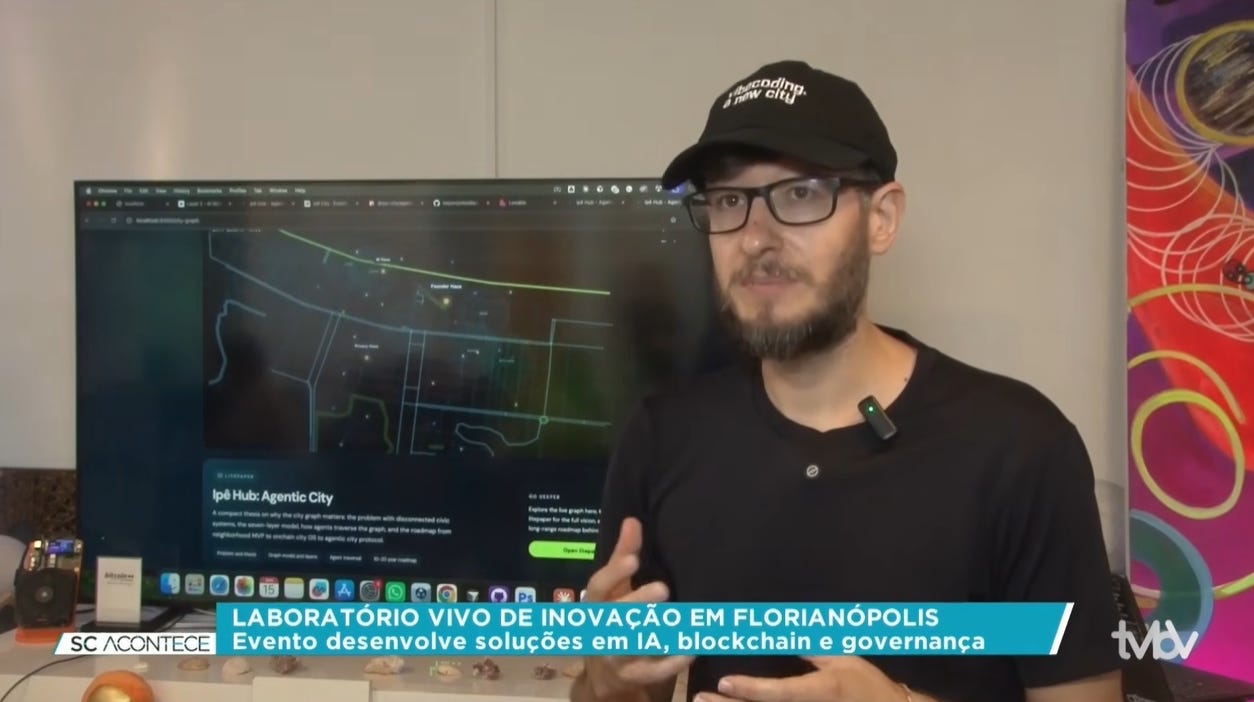
Broadcast television caught up with the Village this week. Band Barriga Verde, the regional network that covers Santa Catarina on free-to-air TV, sent a crew into Ipê Village and aired a segment on Brazil’s popup city experiment.
It was one of the first direct appearances of the Village on regional broadcast TV.
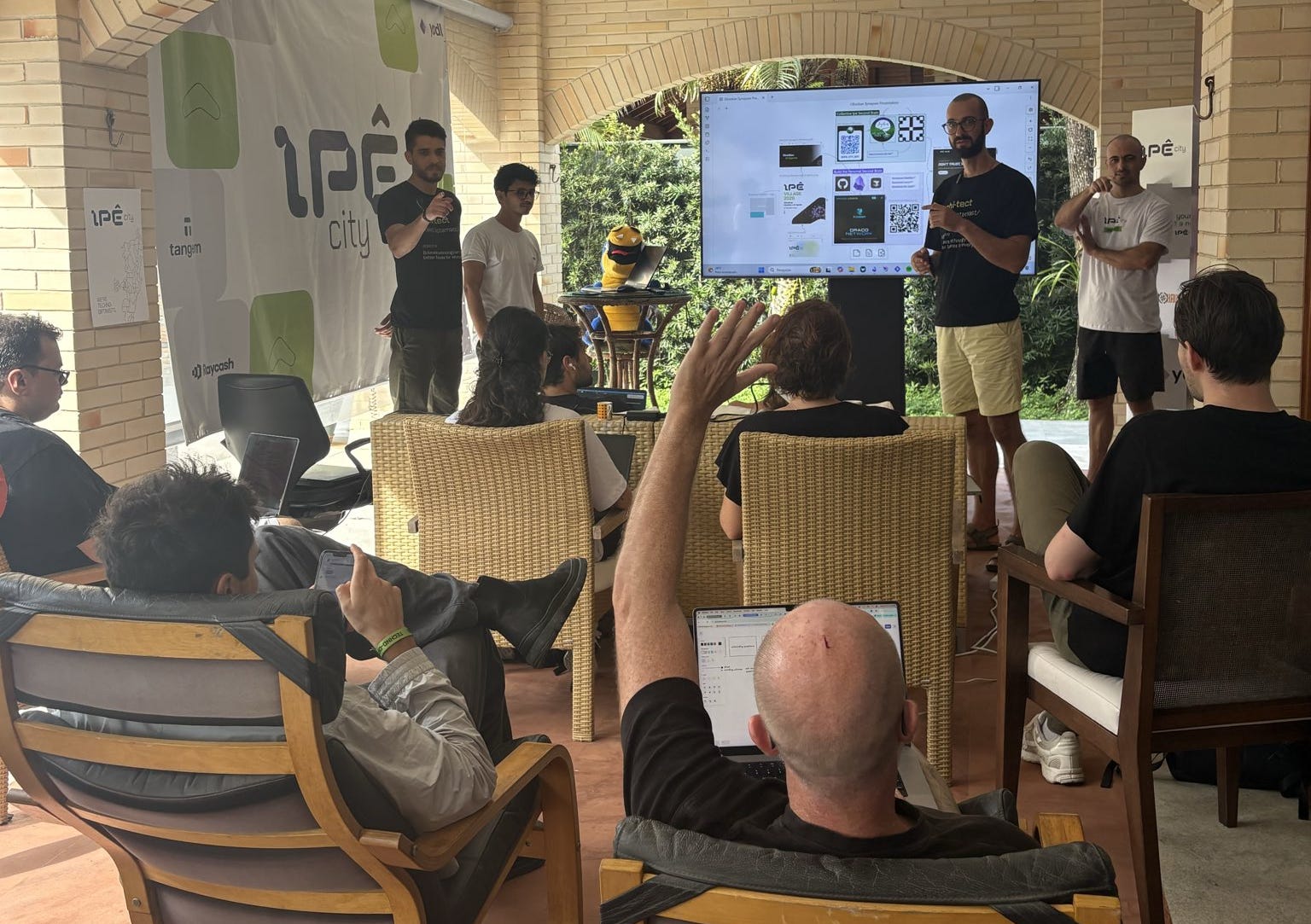
Week 2 ran like a compact technical festival spread across Jurerê. Inside the Village, residents sat down with Stéfano and Matheus to map a collective second brain in Obsidian, connecting identities, skills, and open questions into one shared graph. Two days later, Joshua from Bonfires.ai joined live for a crossover between infrastructure and network culture, with the Ipê Architects treating the session as a working proof of concept for the Ipê Mind Tree.
Pacu opened ATH In Collaboration! as a practical path into the Zcash ecosystem, from development and research to grants and governance. That same morning, Logos joined remotely through @hackyguru with a workshop on local-first Web3 and the idea of parallel society as a software stack. In the afternoon, Founder Haus hosted Julia H. Buratto for Layer 2, closing the gap between prototype and shipped product through design tokens, component registries, and agents in the terminal.
The arc closed at the AI House, where Caros Libardo, Bruno Amorim, and Gabriel Novak walked builders through Layer 1 and Layer 3, ending with an AI Judge that scored sample grant proposals in a format ready to go onchain.
🏫 Learning
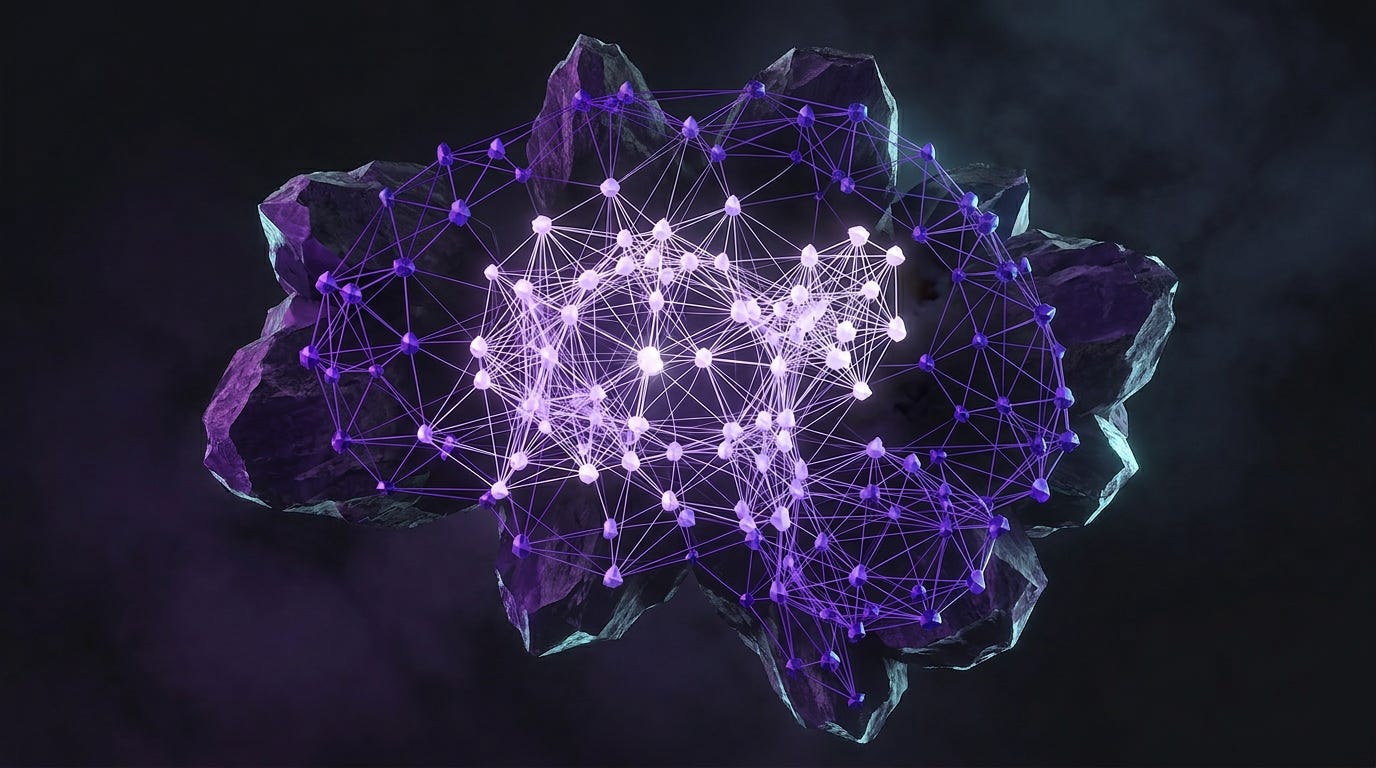
Most computers we still use were designed to simulate an office. Files sit inside folders, documents live on a desktop, and a trash can waits in the corner. That metaphor came out of Xerox PARC in the 1970s because it was easy to teach office workers, not because it was the best interface for thought.
For most people, a second brain is a notebook system that finally works. Tools like Notion, Roam Research, and Obsidian package the same promise: one searchable place where highlights, half-finished essays, and stray ideas can coexist. Tiago Forte gave this category its defining language with a simple proposition: your biological brain is for thinking, and software can absorb more of the storage burden.
The mind garden model goes one step further. Notes grow into other notes through links, canvases make ideas coexist in space, and graph views look less like a folder tree and more like your own cognitive topology.
🌐 Network Societies Update
From late April through mid-May, Network School in Forest City becomes a five-week Build Station for the Solana Colosseum Frontier track. Teams ship across DeFi, infrastructure, AI, RWA, and GameFi while mentor office hours and pitch sessions structure the residency, with a parallel kickoff in Kuala Lumpur.
Two side tracks hint at where Solana is moving. SNS pushes .sol names as an identity layer for agents, and MagicBlock keeps building ephemeral rollups for in-protocol privacy. The cohort closes with Demo Day on May 14, and by then the residency format has done its quiet work: five weeks on the same campus with the same builders makes the phrase Network State feel concrete.
🛠️ Parallel Institutions
Tools for the Commons: Governance Infrastructure for Digital-First Institutions #ParallelJurisdictions
Incorporating a remote company has usually meant borrowing someone else’s jurisdiction. Founders register where they do not live, adapt to legal code built for industrial firms, and operate globally through frameworks that were not designed for internet-native organizations.
Tools for the Commons treats that gap as infrastructure. The venture connects Próspera ZEDE and Zanzibar Digital Free Zone into one operating layer through DAZ, where teams can complete KYC, incorporate, issue invoices in USD, EUR, BRL, or USDC, and receive payments through rails like PIX, SEPA, and stablecoins. The model is framed as a Digital Economic Zone, joining the coordination logic of a Network State with the legal execution pattern of Startup Cities.
The legal spine gives this stack weight. Próspera runs on Article 329 of the Honduran constitution and a fifty-year Legal Stability Agreement, while the Zanzibar side is anchored in Investment Act No. 10 of 2023, a presidential designation in December 2024, and a tax code enacted in March 2026.
The Press Trial Without the Courthouse #ParallelLaw
For most of the modern era, challenging a published story in the United States meant suing a publisher and waiting for a court to take the case. The threshold is high, the process is slow, and that asymmetry shaped the practical limits of accountability in media. Aron D’Souza, known for the legal campaign that led to the Gawker bankruptcy, has been working this institutional fault line for years.
On April 15, his startup Objection launched with seed funding from Peter Thiel, Balaji Srinivasan, Social Impact Capital, and Off Piste Capital. For $2,000, anyone can file a factual challenge to a published claim. A jury of models from OpenAI, Anthropic, xAI, Mistral, and Google reads the evidence and returns an Honor Index score for the reporter. A companion product called Fire Blanket already operates on X with “under investigation” overlays in live threads.
🌍 Other Interesting News
SuperRare x objkt Bring a Cross-Chain Digital Art Festival to NYC
SuperRare and objkt take over Offline Gallery at 243 Bowery from April 16 to 29, bringing Ethereum and Tezos artists into the same physical venue for two weeks. Generative art, poetry, and onchain performance appear side by side, with the gallery acting as a live bridge between ecosystems that usually move on separate rails.
Isle of Man Passes World-First Data Asset Foundations Law
Tynwald approved Data Asset Foundations in April 2026, creating a legal wrapper that allows datasets to be held and pledged as a recognized asset class. Digital Isle of Man positions the framework for AI training corpora, gaming telemetry, and health data, an early move by a small jurisdiction to treat information less like a loose commodity and more like a structured asset.
💡 Join Ipê Village 2026
Ipê Village 2026 will be our next large-scale experiment exploring the future of communities, cities, and governance. Hosted in Florianópolis, Brazil, in March/April 2026, this pop-up city is open to founders, builders, creators, and techno-optimists.
Follow the journey and join the community on Twitter or Discord.