
Ipê News #33 - Startup Society Conference III, Third Places, and the Ethereum Economic Zone
Your weekly update on what is happening in the Startup Society ecosystem.
Hey builders! Welcome to the 33th edition of Ipê News.
🏘️ Community Updates
Ipê Village 2026 returns to Florianópolis in April for another month-long pop-up, bigger this time, with more Hacker Houses, more residents, and deeper experiments in governance, AI, and crypto.
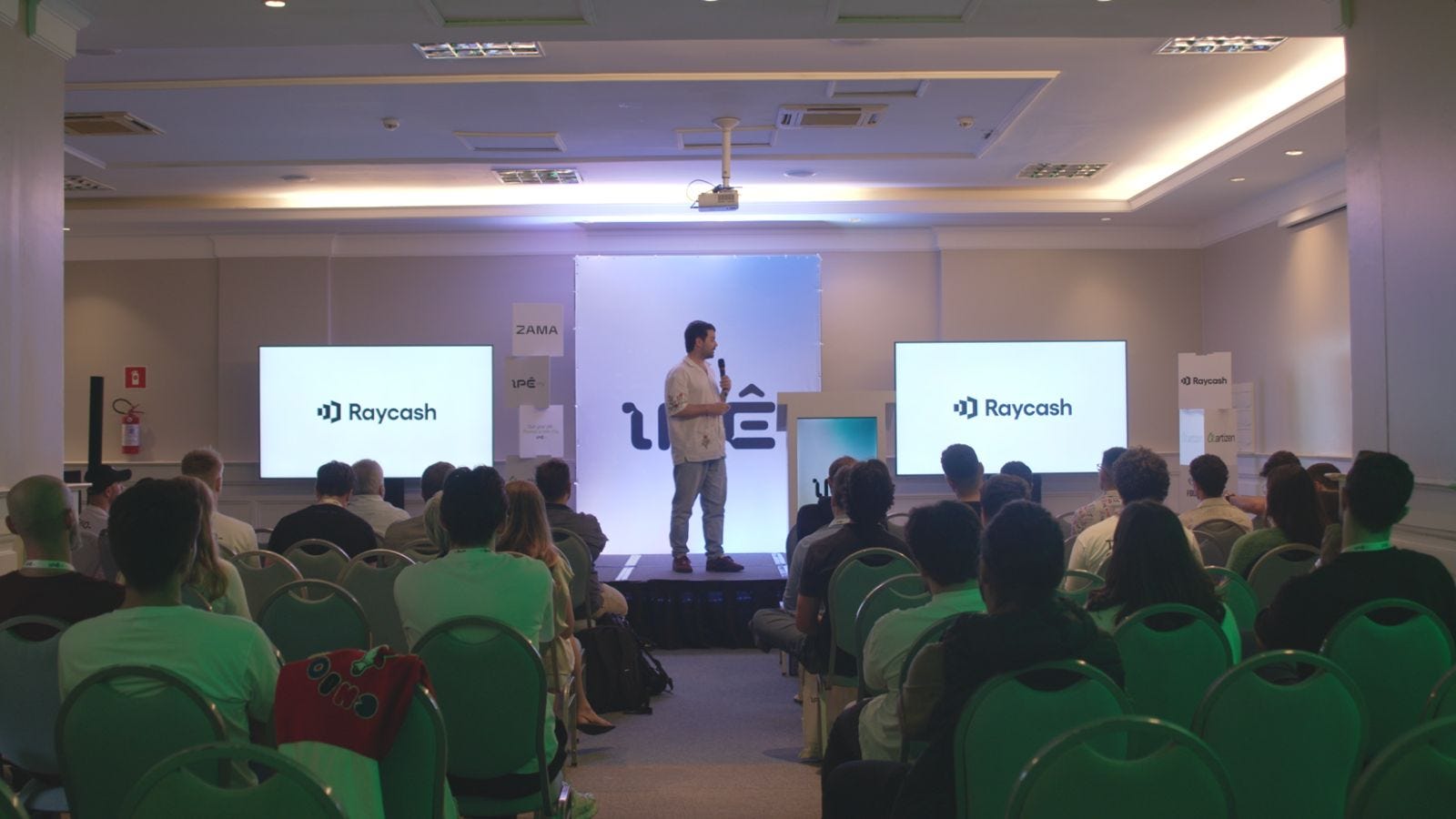
The Startup Society Conference III - April 10-11, Jurerê
The Startup Society Conference took over IL Campanario Villaggio Resort for two days.
Day one was all about governance and startup cities - Jean Hansen kicked things off with the state of network societies, Hugo Mathecowitsch (reState) made the case for third places, and the afternoon packed in talks from Bradford Cross on Alpha City’s federation model in Africa, David Laloum on Mata’s green-tech vision for Rio, Joyce Brand on durable governance, and Ingrid Barth on making Brazil a startup country, among others.
Day two shifted to crypto and privacy, covering AI in decentralized decision-making and tokenized city financing. Eighteen speakers across both days, a Happy Hour at Founder Haus, and the full livestream is up on YouTube.
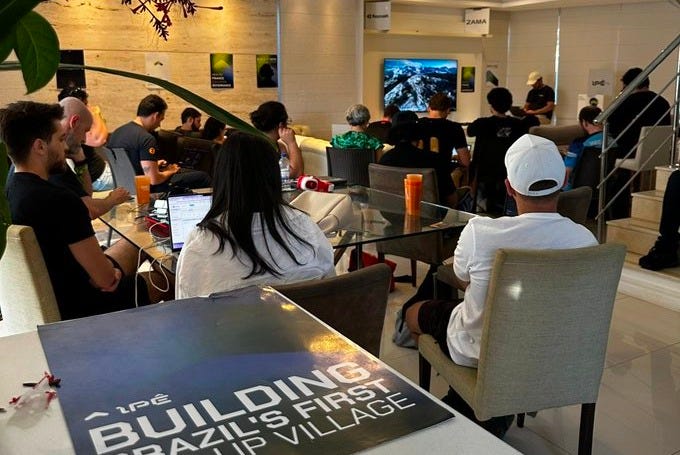
Workshops at Ipê Village
Between conference days and build sprints, the Village ran hands-on workshops throughout the month. Zama led a deep dive on building privacy-preserving apps onchain using fully homomorphic encryption. OpenClaw walked residents through orchestrating AI agent teams from the ground up. And “Don’t Trust, Verify” covered security fundamentals for builders who want to ship fast without cutting corners on safety. Each session gave participants enough runway to work with real code and tooling rather than just watch slides.
Open Mic Builds and Village Life
The Open Mic sessions gave Ipê Architects a stage to share what they have been shipping. Projects on display included Ipê Hub, an agentic cities platform; Ipê Mind Tree, a coordination layer mapping the ecosystem’s research and knowledge; a sports app; governance systems, block-chain, and agent-powered interfaces designed to make the way people interact with machines feel more human.
Outside the build hours, the Village found its own rhythm. Barbecues, movie nights, morning beach runs, ice baths, sauna sessions, and pickup sports filled the weeks between workshops and code.
🏫 Learning
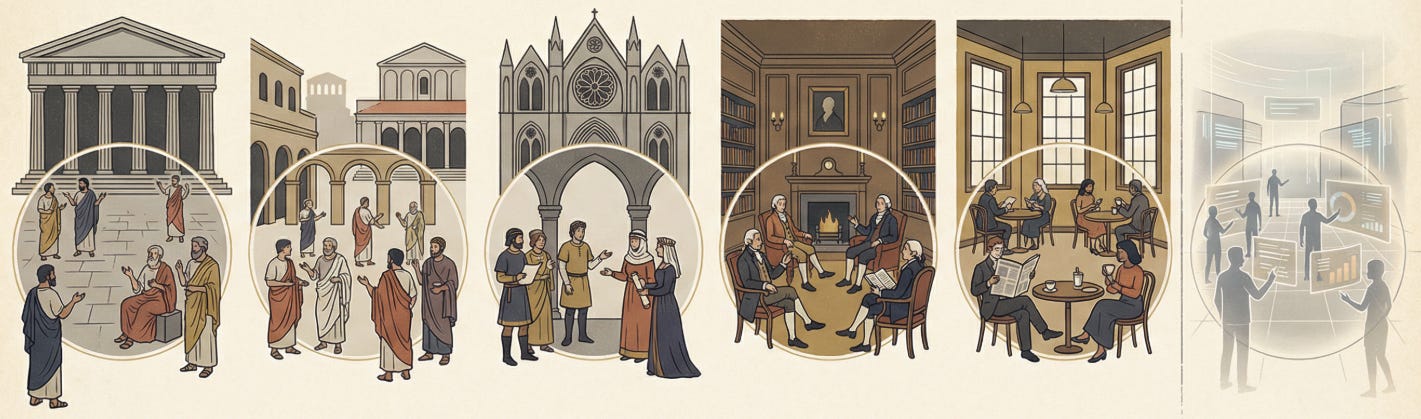
Every civilization formed around a place that was neither home nor work. In Greece, the agora mixed philosophy, trade, and assembly. Rome scaled that function in the forum, where law and commerce shared one stage. Medieval Europe recentered social order in the cathedral, joining religion, education, arts, and arbitration. The salon curated discourse for elites, and the coffeehouse widened access, feeding journalism and revolution.
In Ray Oldenburg’s framework, these are third places, the tissue where civic life forms. Hugo Mathecowitsch of reState brought this arc to Governance Day in Jurerê with an open question: if we are founding new civilizations, what is the next third place? A Discord server can coordinate, but it does not yet compound trust like an agora or a coffeehouse.
🌐 Parallel Communities and Cities
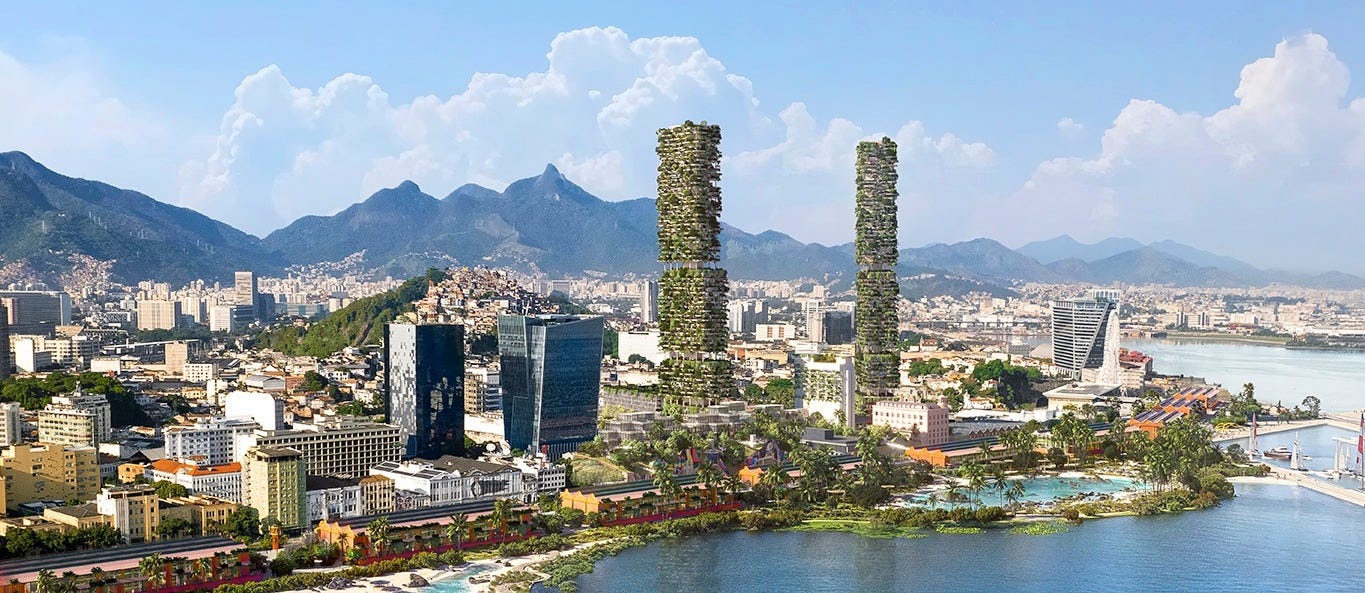
Porto Maravilha was Rio’s Olympic-era bet on waterfront revival. A decade on, much of the district still waits for a second act. Mata Maravilha is the proposed next chapter: a 223,000 m² regeneration project that would plant 40,000 native Atlantic Forest trees across the port zone and build a green-tech campus facing Guanabara Bay.
Selected through a public call by Rio’s municipal investment arm CCPar, the initiative from Alexandre Allard and Autonomy Capital combines zero-carbon construction, a regeneration-focused university, and incubator space aimed at drawing engineers and digital nomads. David Laloum presented the vision at this week’s Startup Society Conference under the banner of reclaiming Rio’s economic relevance through nature and technology. If the thesis holds, the city’s next competitive edge grows from Atlantic Forest soil.
Bradford Cross presented Alpha City at the Startup Society Conference in Jurerê on April 10. The company builds industry-specialized cities through joint ventures with African governments, each organized around a sector where the host country holds a strategic edge. Eight partner countries have zone law frameworks and master planning underway. Four templates drive the pipeline: Crypto, AI, EV, and Aerospace cities.
Cross, who also leads Pronomos Capital, has argued that full autonomy from the host state leads to political fragility, pointing to Honduras’s ZEDEs. The initial pipeline focuses on Lusophone Africa.
🛠️ Parallel Institutions

Introducing the Ethereum Economic Zone (EEZ) #Parallel Institutions
Rollups brought Ethereum’s fees down and throughput up, but each major L2 became its own silo of liquidity and bridges. The Ethereum Economic Zone reframes that fragmentation as a design problem: participating rollups would share synchronous composability with mainnet, letting contracts call across chains in a single atomic transaction with ETH as the settlement layer.
The Ethereum Foundation funds the effort through a Swiss-based EEZ Association. Gnosis, ZisK, Aave, and Centrifuge anchor the founding alliance. Specs and tooling are still weeks out, so this is alignment before architecture. The bet is clear: Ethereum’s next bottleneck is coordination between its layers, not raw speed.

Running AI inference today means renting time on GPU clusters that a few companies control. NVIDIA designs the silicon, hyperscalers run the racks, and anyone deploying models at scale passes through that funnel. Extropic is engineering a different path.
Their chips treat thermal noise as the computation itself, converting the physics that conventional designers suppress into a processing resource. The Z1 hardware, entering early access this year, targets probabilistic inference, workloads where GPUs waste energy simulating randomness that analog circuits produce natively.
🌍 Other Interesting News
In April 2026 the CFTC sued Connecticut, Arizona, and Illinois, claiming federal commodities law governs Kalshi and Polymarket. Chairman Selig called state cease-and-desists overreach; AGs say the contracts are illegal betting. CNBC reports lawmakers asking about offshore conflict-linked trades. The thread is federalism for event contracts.
DRIF26 in Abidjan (April 2026) is Africa’s Digital Rights and Inclusion Forum - Paradigm Initiative plus Wikimedia sessions on youth inclusion, open knowledge, multilingual access, and Wikidata as digital public goods. It is commons infrastructure under the protocol headlines: languages, archives, and representation in AI datasets.
💡 Join Ipê Village 2026
Ipê Village 2026 will be our next large-scale experiment exploring the future of communities, cities, and governance. Hosted in Florianópolis, Brazil, in March/April 2026, this pop-up city is open to founders, builders, creators, and techno-optimists.
Follow the journey and join the community on Twitter or Discord.