
Ipê News #28 - Women Pushing Science and Web3, and Amazonian Urbanism
Your weekly update on what is happening in the Startup Society ecosystem.

Hey builders! Welcome to the 28th edition of Ipê News.
🏘️ Community Updates
Ipê Village 2026 returns to Florianópolis in April for another month-long pop-up, bigger this time, with more Hacker Houses, more residents, and deeper experiments in governance, AI, and crypto. Join the Telegram group.
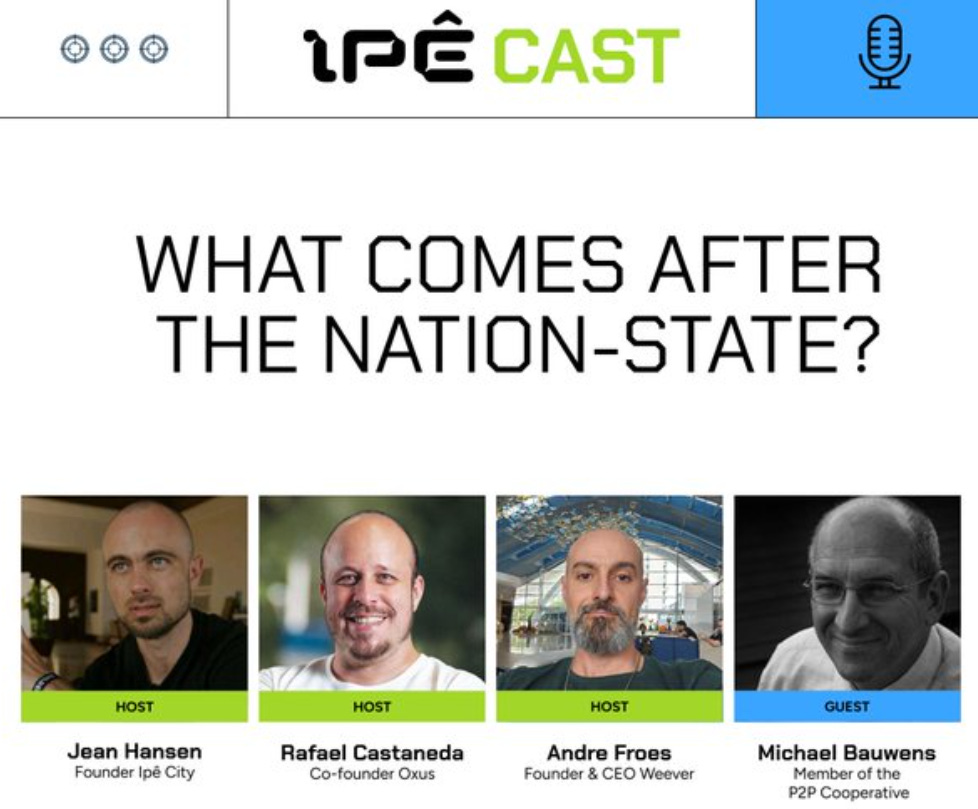
Last Thursday’s live with Michel Bauwens, founder of the P2P Foundation, ranged across AI, the long arc of civilizational history, the current war scenario, and what parallel institutions can realistically look like in an unstable world. Full broadcast on Youtube.
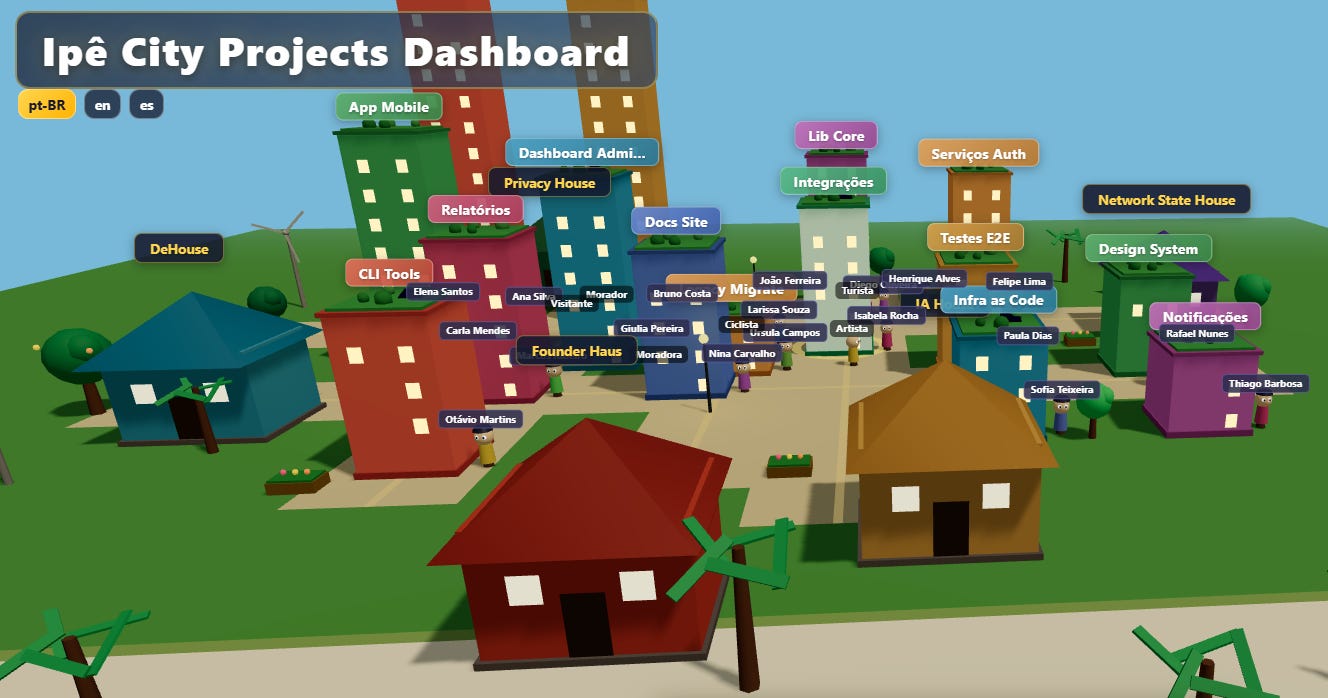
Ipê City's latest meetup challenged builders to vibecode a dashboard for the city they'd want to live in, and the same prompt produced completely different metrics, visualizations, and ways of representing urban life. One builder, George, created an app where social and financial data appear as physical structures.
🏫 Learning
What is P2P?
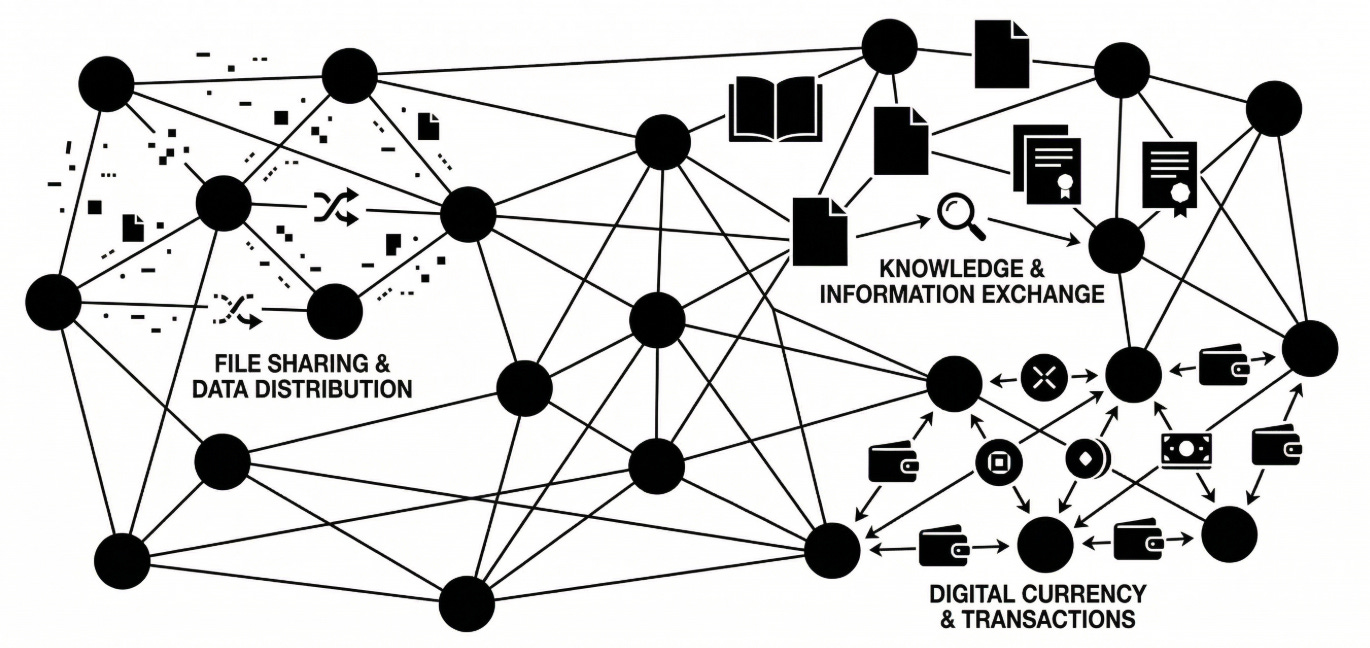
P2P, or peer-to-peer, is a network where participants connect directly to each other without a central server controlling the exchange. The P2P Foundation has documented these dynamics since 2005. BitTorrent pioneered this in file sharing. Instead of downloading a movie from one central server, you pull fragments simultaneously from thousands of users, each one both consumer and distributor.
Bitcoin applied the same logic to currency. Transactions settle between wallets without a bank approving, recording, or charging for the transfer.
Wikipedia takes the same principle into knowledge production. Thousands of contributors write and maintain articles without any central authority coordinating them.
P2P removes that expectation altogether. You contribute to the whole, and the whole remains available to everyone. For the theoretical backbone, see the sources of P2P theory.
🌐 Parallel Communities and Cities

Bhutan has tied sovereign residency to a blockchain-native asset. The country’s new digital nomad visa requires applicants to purchase $10,000 in tokenized gold on the Solana network, held for up to 36 months then refunded.
The design extends network state logic into official government infrastructure: residency access bound to a verifiable transaction, with the state earning yield while the term runs.
🛠️ Parallel Institutions
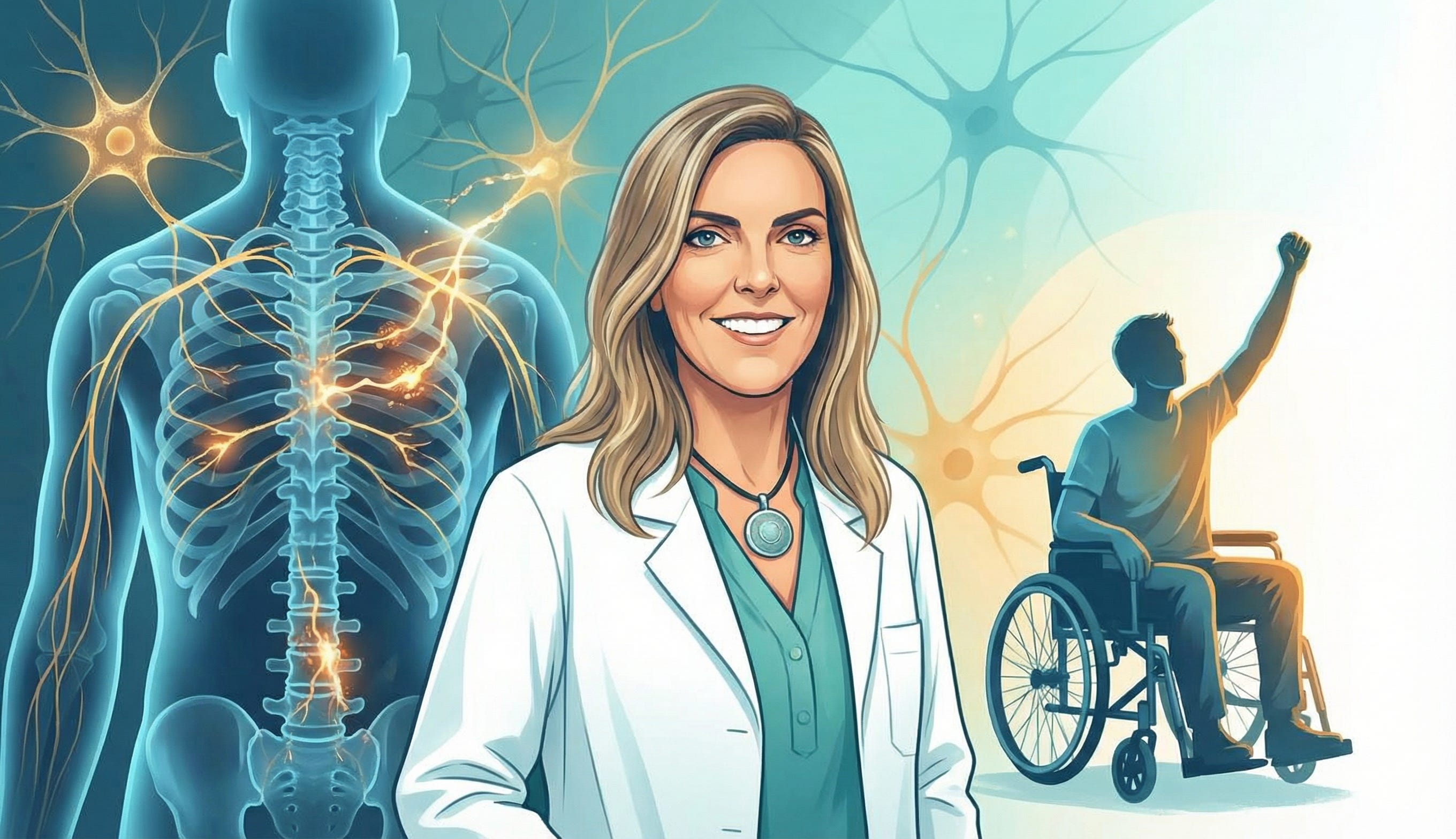
Tatiana Sampaio, a neuroscientist at UFRJ, identified a family of proteins lining the walls of blood vessels inside the nervous system. She named them polylaminins. They bind to axons and guide reconnection, forming chains that thread through damaged tissue. In Anvisa-approved clinical trials, six of eight patients recovered movement. One walked again.
Sampaio ran the research for decades without a dedicated sponsor, through voluntary collaboration across Brazilian institutions. In interviews, she has spoken about the difficulty of securing investment.
Cristália eventually committed R$100 million to support clinical trials. In January, Anvisa authorized the start of an official clinical study to evaluate the safety of polylaminins in humans. If all three phases succeed, the medication could be available within five years.
The Brazilian Academy of Neurology has raised questions about the absence of peer-reviewed data and control groups in the preliminary results.
Research sitting between academic science and commercial viability has always struggled within existing funding structures. DeSci, Decentralized Science, has been building a different approach: research DAOs fund studies through tokenized models, data is shared openly, and governance is distributed across contributors rather than held by a single institution.
This week, Forbes Brasil named her among the Most Powerful Women of Brazil 2026. For a broader picture of Brazilian women in crypto and web3, see this roundup of executives and investors.
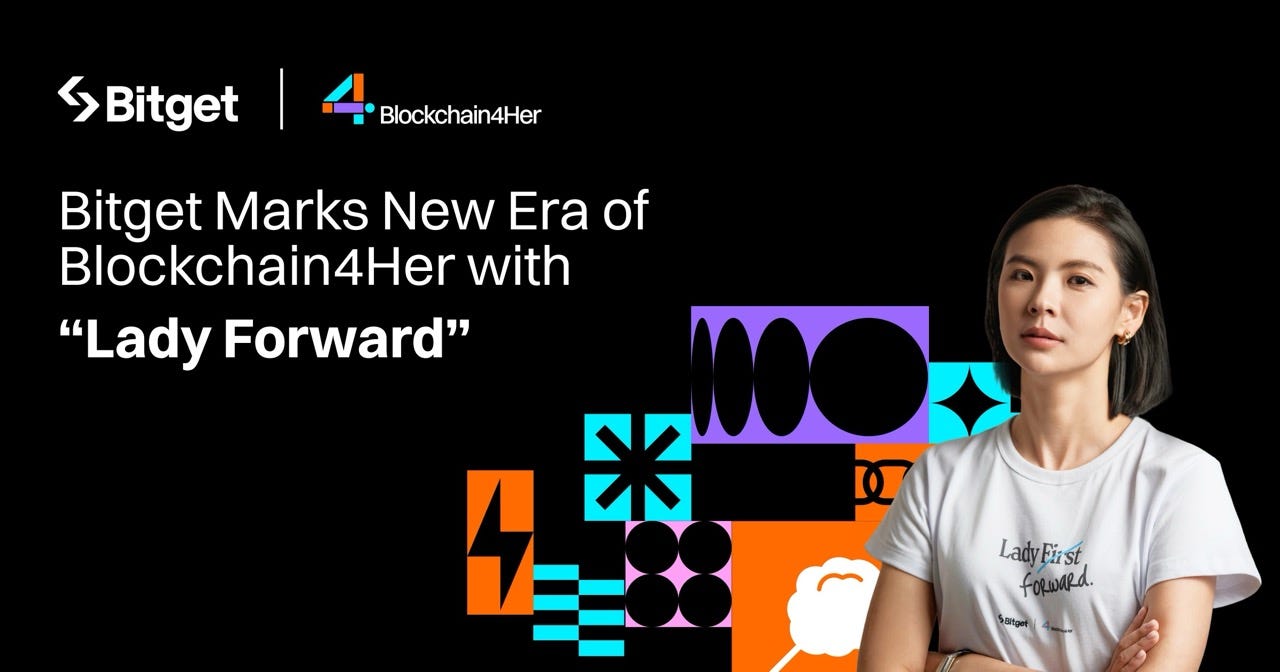
Bitget launched Blockchain4Her to mark Women’s Day, combining grants, educational resources, and visibility campaigns to bring more women into Web3.
The Lady Forward program extends that effort with mentorship and industry partnerships, shifting the focus from awareness to building. Together they trace a fuller arc: first make the space visible, then make staying in it sustainable for women who are actively developing in the sector.
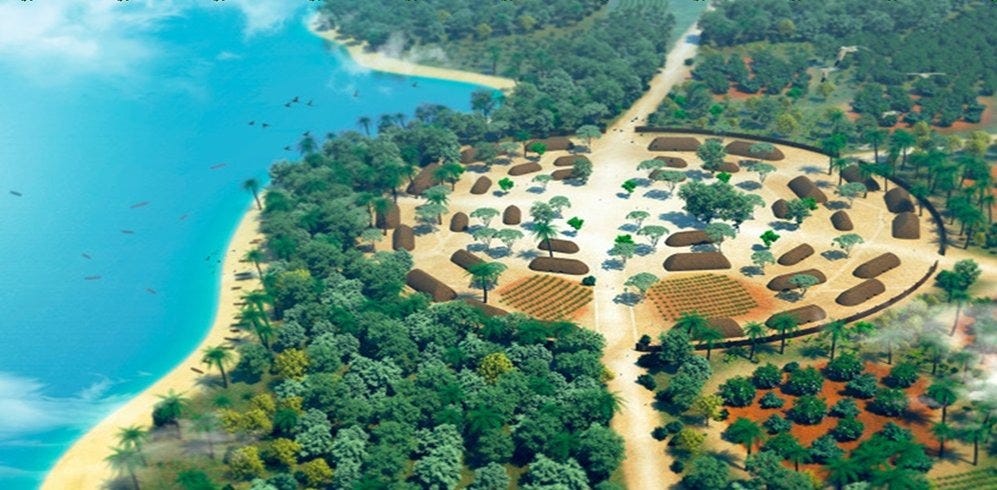
Archaeology is rewriting the Western view of how urban life was in the Americas. It is estimated that more than 10,000 pre-Columbian earthworks are still hidden across Amazonia. Another study documented 2,000 years of continuous garden urbanism in Ecuador’s Upano Valley, thousands of platforms, plazas, and roads threading through the region.
The Dark Earths (terra preta) tells the same story from underground. Amazonian soil is naturally acidic and nutrient-poor; these communities spent centuries depositing organic matter, ash, and ceramics into it until it became a self-regenerating earth that researchers still find productive today.
Useful species appear near former settlements at much higher rates than anywhere else in the basin, a pattern traced across thousands of kilometers.
🌍 Other Interesting News
Brazil's Central Bank expanded Pix to Argentina, letting Brazilians pay merchants and send money across the border through QR codes with automatic conversion. The service is open to all 170 million Pix users. Expansion to the Americas, Europe, and Asia is being evaluated.
SheFi runs education programs and community infrastructure for women entering DeFi and Web3, with an active Brazil chapter. The initiative connects women across the ecosystem as builders, investors, and protocol contributors.
An AI-driven particle simulator generates and visualizes complex particle systems from text prompts, then exports them as HTML, React, or Three.js simulations.
💡 Join Ipê Village 2026
Ipê Village 2026 will be our next large-scale experiment exploring the future of communities, cities, and governance. Hosted in Florianópolis, Brazil, in March/April 2026, this pop-up city is open to founders, builders, creators, and techno-optimists.
Follow the journey and join the community on Twitter, Telegram or Discord.