
Ipê News #25 - XPRIZE Wildfire, Bhutan's Negative-Space Urbanism, Liquid Architecture, and more.
Your weekly update on what is happening in the Startup Society ecosystem.

Hey builders! Welcome to the 25th edition of Ipê News.
🏘️ Community Updates
Ipê Village 2026 returns to Florianópolis in April for another month-long pop-up, bigger this time, with more Hacker Houses, more residents, and deeper experiments in governance, AI, and crypto.
The first community gathering happens February 24: a screening of The Network Society Episode 2 followed by open conversation about the village format, how to participate, and how to host a themed house. Free, but registration required.
Meanwhile, AI Prompt Nights hits edition #21 at Jurerê Beach Village. Laptops open, no slides, dinner included. Prompt engineering, agents, automations, all hands-on and in English. Doors at 6:30 PM, program at 7:30.
🏫 Learning
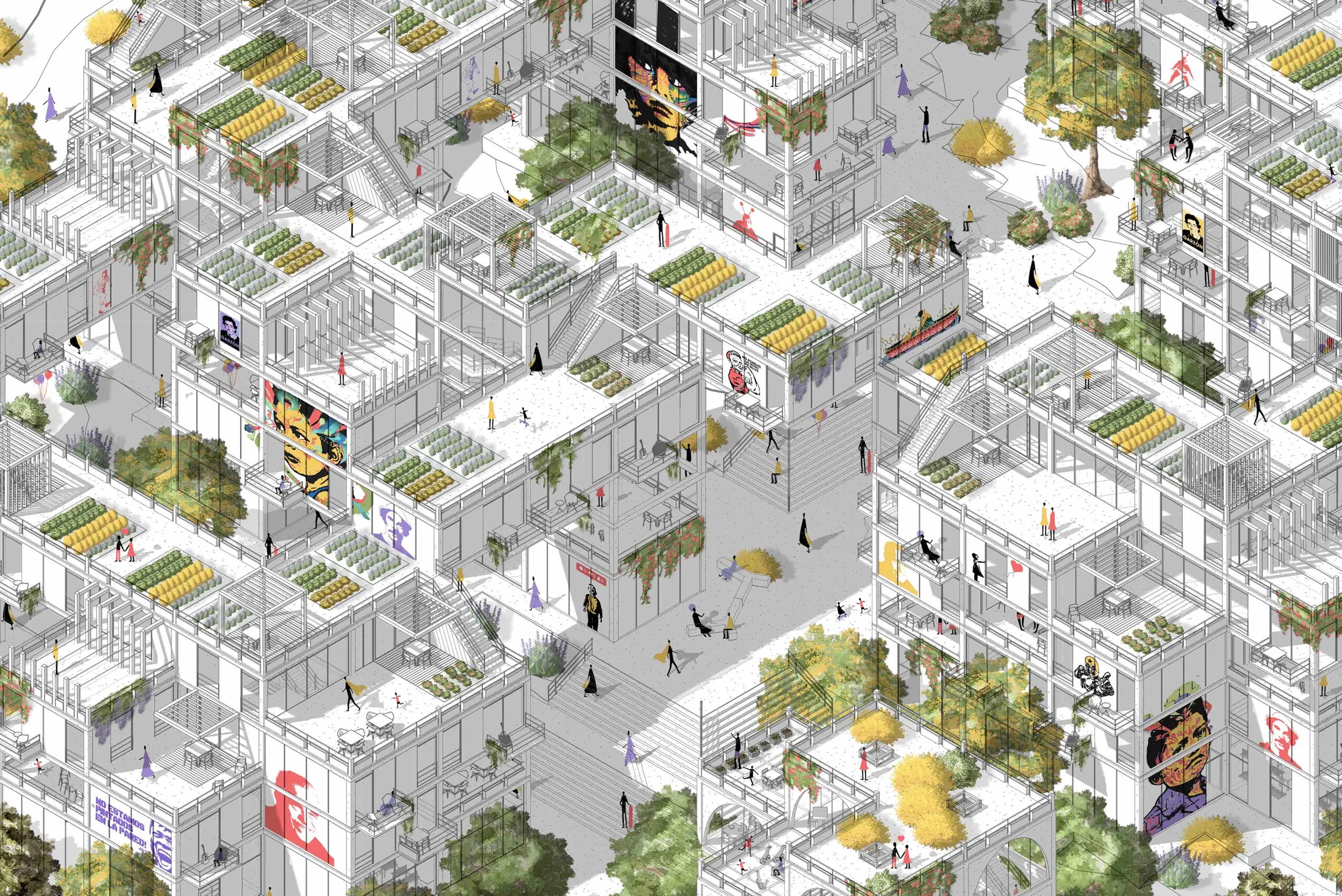
Traditional infrastructure is hardware. You pour concrete, weld steel, lock in assumptions about population size and behavior patterns, and hope the city grows into it. Modular construction treats infrastructure like software: versioned, updatable, reconfigurable. The building can be refactored.
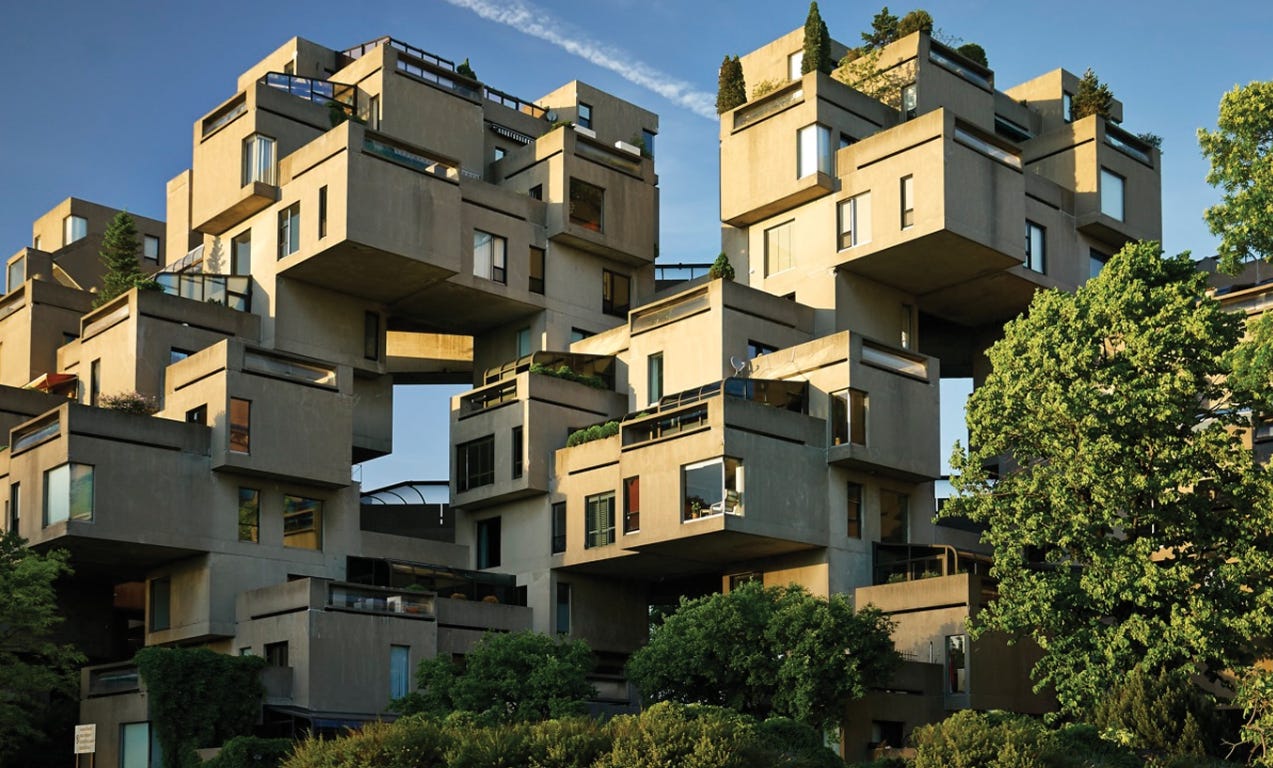
The mechanism is simpler than it sounds. Fabricate components off-site. Walls, floors, structural frames, plumbing pre-installed, then assemble on location like LEGO blocks. When the city needs to expand, you don’t call the wrecking crew. You unclip modules, reconfigure the layout, reassemble. The Star Apartments in Los Angeles stacked 102 prefabricated units in six weeks. Roatán’s Próspera designed a kit-of-parts system with Zaha Hadid Architects: modular wood units (35m² voxels) that generate over 15,000 layout variations via parametric software. Liberland’s Archistroj proposal uses shipping containers in 2.3x3m grids, open-source so settlers can expand their own homes via mechanical solid geometry. Other projects like Gelephu in Bhutan are designing its new facilities by applying the fluid architecture principles
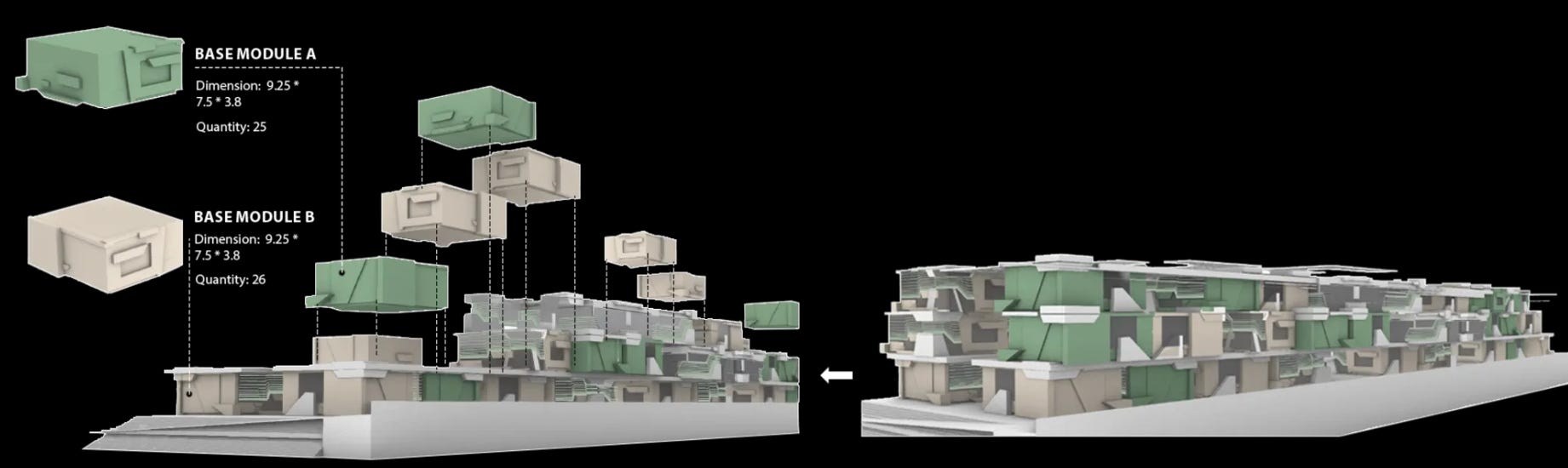
If everything is modular, doesn’t everything look the same? Not if the system is parametric. Próspera’s ZHCODE platform lets residents configure floor plans, shading, solar orientation, materials. The kit is standardized, the outcomes are custom. The constraint isn’t aesthetic, it’s logistical. Modular systems depend on supply chains, fabrication plants, regulatory frameworks that recognize buildings as assemblies rather than permanent structures. Most projects are still testing whether the code compiles in the real world
🌐 Network Societies Update / Parallel Communities and Cities
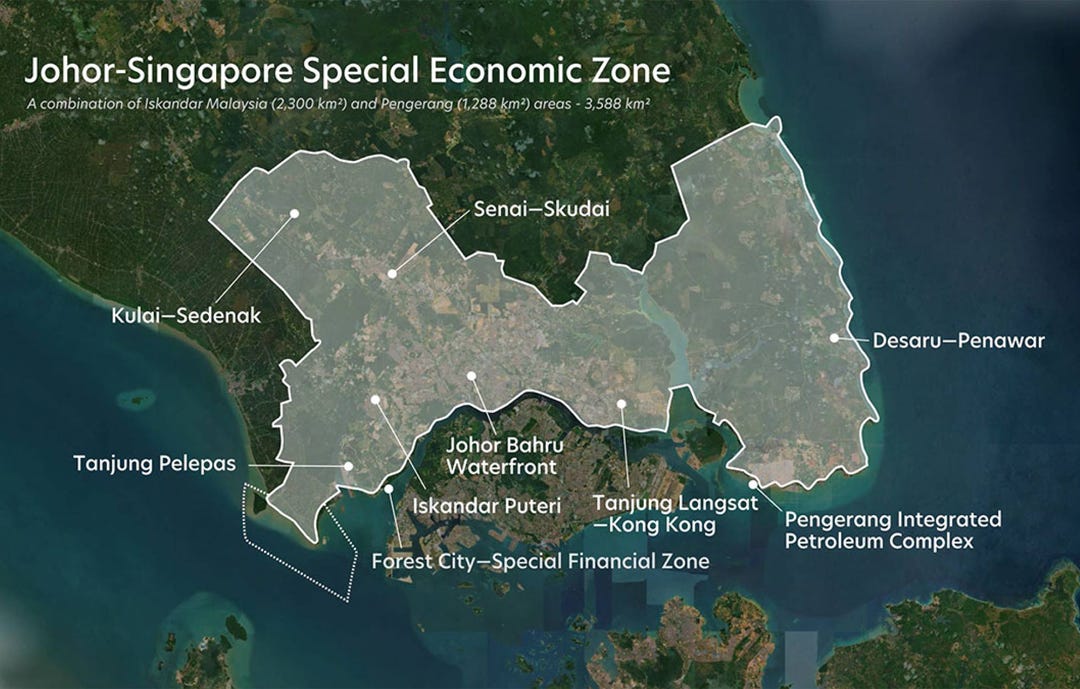
Malaysia is finalizing the JS-SEZ Investment Blueprint and Masterplan, targeting an official launch in March 2026. The zone combines Johor’s scale and resources with Singapore’s capital, technology, and global connectivity to attract high-value investments and strengthen supply chains.
In practical terms, the JS-SEZ works like a shared border corridor between Malaysia’s Johor state and Singapore where companies will get special incentives to set up operations. The blueprint will define which industries get priority, along with infrastructure and talent programs designed to create quality jobs on both sides of the Causeway. Both governments describe the project as officially moving from planning into implementation.
🛠️ Parallel Institutions
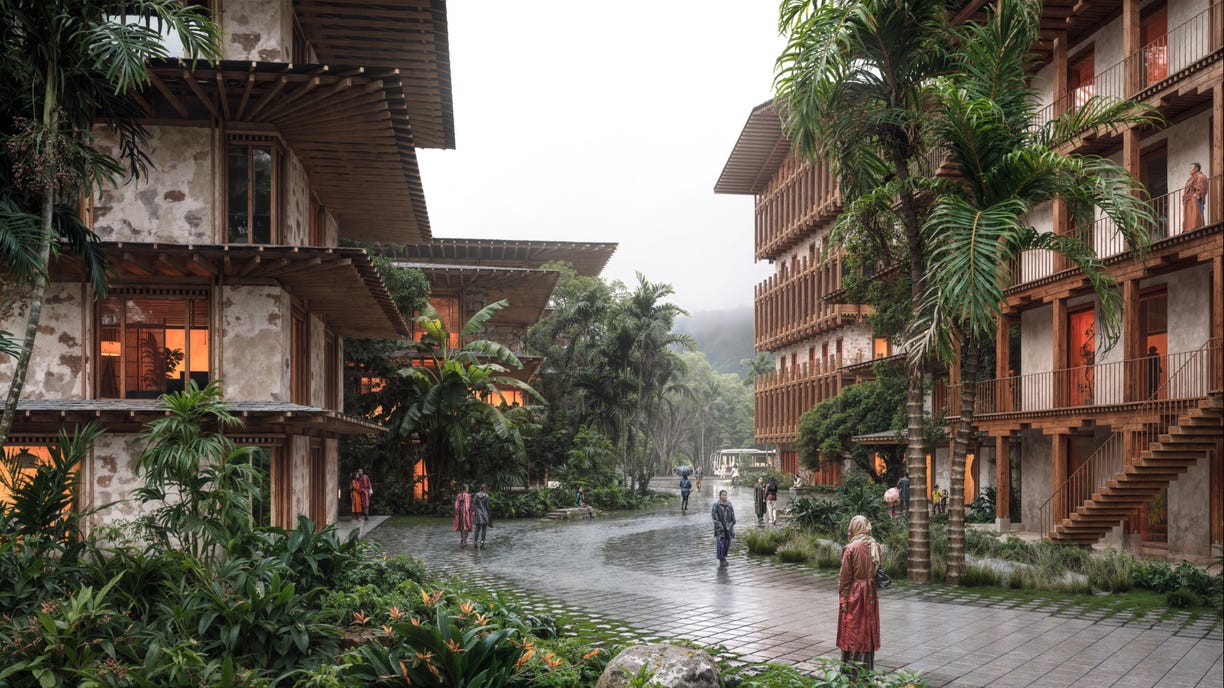
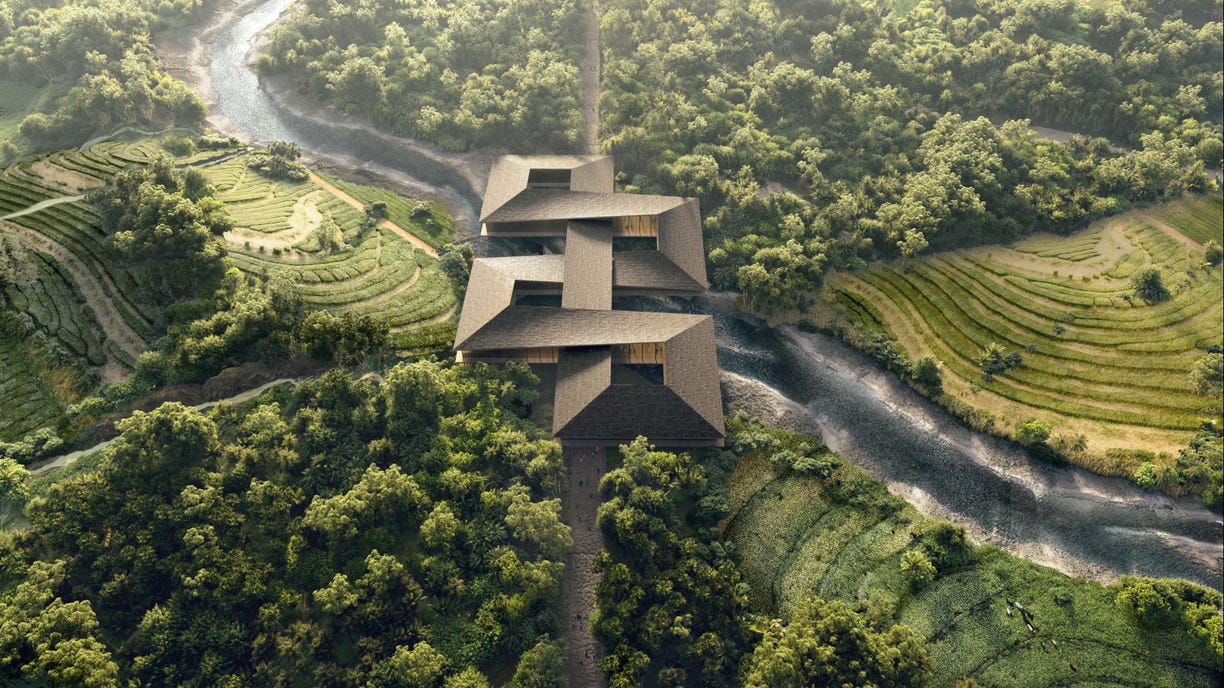
Most cities begin with a road. Gelephu Mindfulness City began with a map of rivers, animal corridors, and floodplains, everything that should remain untouched. BIG’s planning team climbed the mountain overlooking the site and drew the negative first: the ecological corridors where elephants migrate from the Himalayas to India, the waterways, the forests. Only after this act of restraint did the built environment appear in the remaining four percent of a 70-million-square-meter territory. It is an architectural inversion that carries a philosophical weight most masterplans avoid: the city is defined not by what it builds, but by what it refuses to erase.
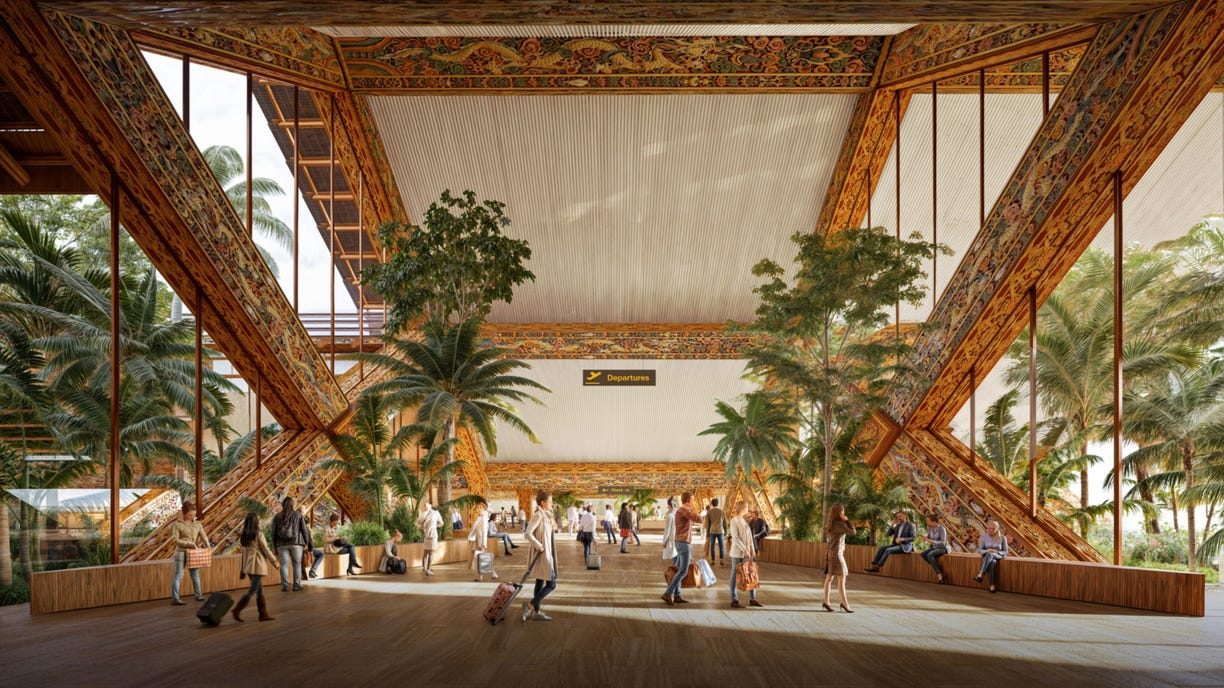
Bhutan has almost no building code. BIG could have done anything. Instead, the firm imposed strict constraints on itself: three to six stories maximum, structural wood and local stone, minimal reinforced concrete and steel. The new airport, designed with NACO as a modular glulam structure that can be disassembled and reassembled as it grows. But the most radical gesture is what happens after the architects leave. “Half of the work is ours,” says BIG partner Frederik Lyng. “The other half is given to the carvers and painters from the art schools, who complete the project and take on the authorship.” The building arrives deliberately incomplete. Craft finishes what engineering starts. In an era where architecture tends toward total control, this is an act of designed freedom.
The ambition is immense and the risks match it. Gelephu is sized for one million inhabitants in a country of seven hundred thousand. The Special Administrative Region needs to attract foreign talent and capital to a kingdom where, until now, no non-Bhutanese could own land or open a business. The site sits between India and China, carrying geopolitical weight that no masterplan can design away.
The question Gelephu forces is whether values can be encoded into infrastructure so deeply that they survive the pressures that follow.
High schoolers compete with defense tech in $11M XPRIZE Wildfire finals #ParallelPublicFunding
Wildfire suppression in the United States is a multi-billion-dollar centralized operation. Government agencies coordinate satellite monitoring, human spotters, and aerial tanker fleets that typically arrive after a fire has already consumed thousands of acres. The gap between detection and suppression is where most damage happens. XPRIZE’s $11M Wildfire competition asked a different question: what if autonomous systems could close that gap to under ten minutes?
Twenty students from Valley Christian High School in San Jose answered. Their team, Wildfire Quest, built a system combining AI-enabled infrared cameras with 2.5-kilometer range and heavy-lift drones carrying fire-extinguishing payloads. They advanced through 300 registrants to the final five, the only high school team, now competing directly against Anduril. Germany’s Dryad took the opposite approach entirely: no drones, no cameras. Their Silvanet system scatters thousands of solar-powered gas sensors across forest floors, detecting fires during the smoldering phase through chemical signatures before flames appear. The sensors communicate through a LoRaWAN mesh network. No centralized infrastructure needed. The forest becomes its own monitoring grid.
Live fire testing in Alaska this summer will determine the $3.5M winner.
Beyond wildfire detection itself, XPRIZE demonstrates a parallel model of governance and capital allocation. Instead of centralized agencies and fixed budgets, it defines outcomes and lets anyone compete to solve them. Capital flows to capability, not credentials. Teenagers, startups, and defense companies operate on equal footing.
This mirrors the philosophy of startup societies and network states: funding public goods through open incentives rather than bureaucracy. Prizes, tokens, and onchain treasuries can coordinate global talent around specific missions, from forests to infrastructure. XPRIZE offers a glimpse of governance by incentive, where societies define goals and let builders compete to achieve them.
🌍 Other Interesting News
Peter Steinberger, creator of OpenClaw (145k GitHub stars), joins OpenAI to build the “next generation of personal agents.” OpenClaw stays open source in a foundation, and Altman says the future is “extremely multi-agent,” signaling agents-talking-to-agents as core product direction.
The entire Electric Coin Company team left its nonprofit structure and formed ZODL (Zcash Open Development Lab), rebranding the Zashi wallet. Their line: "There is no sovereignty without privacy," with plans to scale shielded ZEC to billions of users without reliance on development fund grants.
Network Societies face a recurring problem: digital engagement drops between physical pop-ups, and group chats can't sustain community momentum. Sandbox games offer a different model where members co-create persistent worlds, developing trust networks through collaborative building, with AI agents potentially acting as autonomous representatives of community members.
Open Future fellow Mila Samdub compares three approaches to digital sovereignty: IndiaStack’s software-centric model, Brazil’s fragmented systems (Pix, gov.br, CAR environmental database), and two competing EuroStack visions.
💡 Join Ipê Village 2026
Ipê Village 2026 will be our next large-scale experiment exploring the future of communities, cities, and governance. Hosted in Florianópolis, Brazil, in March/April 2026, this pop-up city is open to founders, builders, creators, and techno-optimists.
Follow the journey and join the community on Twitter or Discord.