
Ipê News #22 - Vibecoding, Onchain Property Rights, AI Drug Discovery, and more.
Your weekly update on what is happening in the Startup Society ecosystem.

Hey builders! Welcome to the 22nd edition of Ipê News.
🏘️ Community Updates
What’s happening inside the Ipê ecosystem.
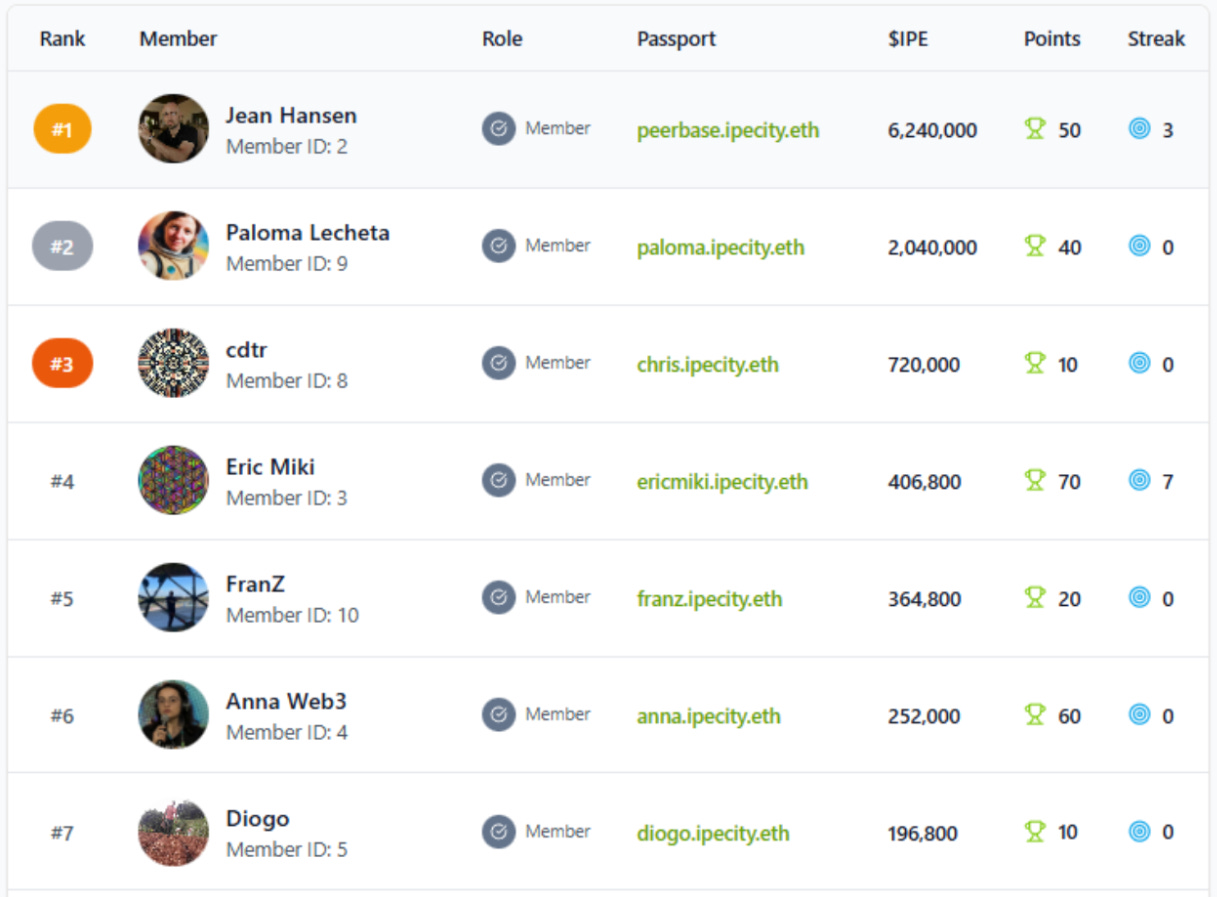
Welcome $IPE token
We just started the first official $IPE token distribution, and it is a pretty big milestone for Ipê City on the path toward decentralized governance.
Tokens were distributed to community members based on 43 real projects completed during Ipê Village 2025. Everything was weighted using the Valocracy Framework.
This was not one of those typical airdrops for holding a wallet or being early. This one was about actual work. People earned tokens for organizing events, creating content, building infrastructure, making key connections, and helping the community grow in real ways.
The distribution establishes a foundation for future governance decisions as Ipê City evolves from a pop-up village to permanent nodes. Members who contributed to the 2025 edition now hold tokens proportional to their documented impact, creating an initial governance body rooted in demonstrated commitment rather than financial speculation. For those interested in earning future allocations, the path is clear: contribute to the community and document your work.
If you want to collaborate with the community and start earning tokens, join our Discord and introduce yourself.
🏫 Learning
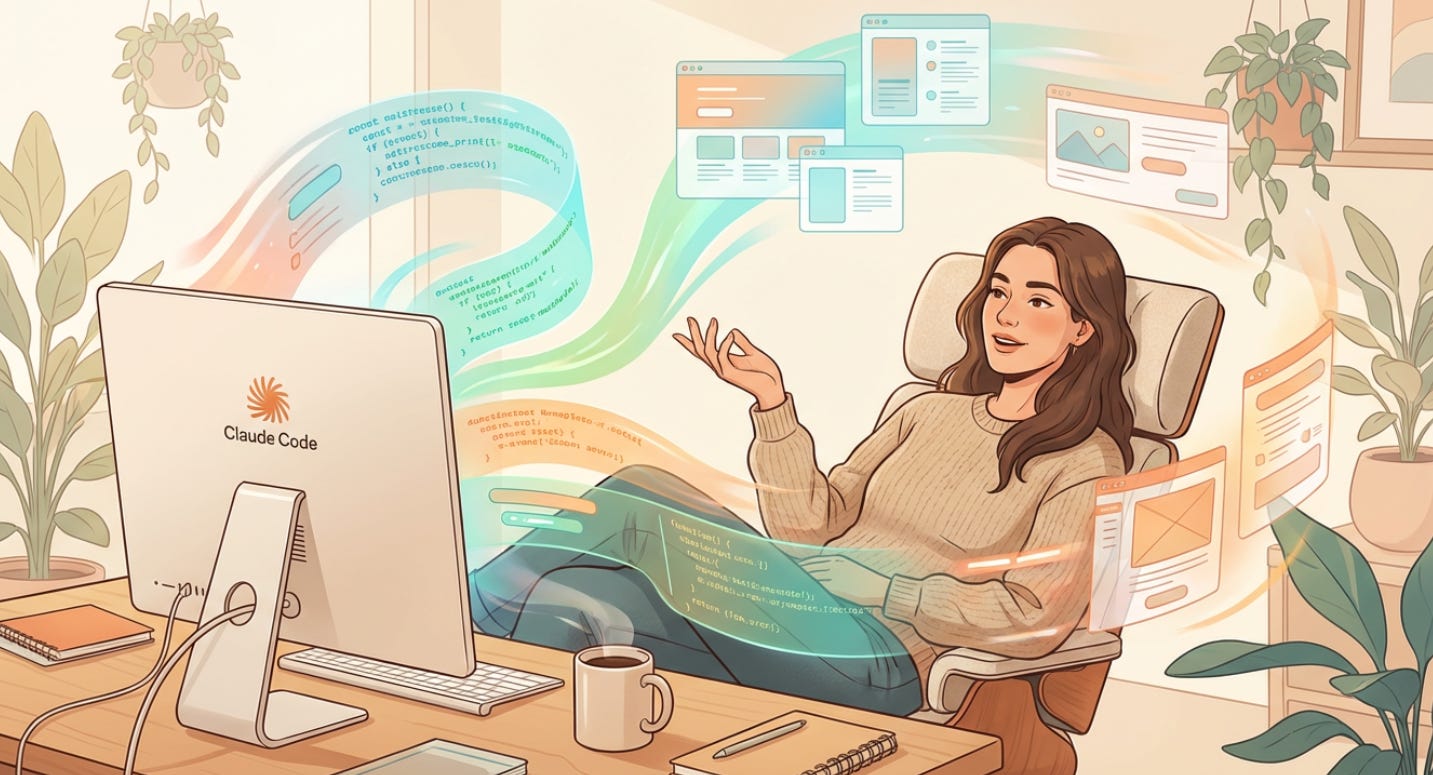
Vibecoding: From Natural Language to Working Software
Traditional software development meant mastering syntax, debugging semicolons, and spending hours on documentation. Vibecoding flips that entirely. The term was coined by Andrej Karpathy, Tesla’s former AI chief, and describes a new approach: instead of writing code line by line, developers describe what they want in natural language and let AI generate the implementation. The focus moves from how to build something to what actually needs to be built.
The tooling has matured fast. Claude Code enables AI-driven coding directly in terminals. v0 by Vercel transforms plain-English descriptions into production-ready React components. Replit enables browser-based prototyping in minutes. These tools don’t replace programming knowledge; they amplify it. The difference between useful and unusable output comes down to prompt clarity and the ability to evaluate what the AI produces. DAOs can now prototype governance tools without expensive dev teams. Popup cities can build custom apps for community coordination. The same way spreadsheets democratized financial modeling, vibecoding is democratizing software.
🌐 Parallel Communities and Cities

Edge Esmeralda is back. The month-long popup village in Healdsburg, California runs May 30 to June 27, 2026. A collaboration between Edge City and the Esmeralda Institute, the event brings together builders, families, and creators for a multigenerational experiment in community living. The goal: prototype what a permanent village could look like before breaking ground on Esmeralda, currently in development 90 minutes north of San Francisco.
It’s a simple but powerful idea. Run temporary gatherings, learn what works, then build something lasting. Edge Esmeralda is now in its third year of testing that thesis.
🛠️ Parallel Institutions
Web3 Intellectual Property: New Frameworks for a Post-State Era #ParallelGovernance
Stanford’s CodeX Blockchain Group is moving Intellectual Property management out of the courts and into the protocol layer. Instead of relying on fragmented national laws, they are proposing a system of “Private Ordering” using Token-Bound Licenses and a Trademark-Charter model to protect innovations. For those of us building parallel institutions, this is the infrastructure we’ve been waiting for: a way to manage and verify IP through code and community agreements rather than slow-moving state bureaucracies.
The framework works by shifting from traditional “territorial” law to computable law. Specifically, it embeds legal permissions directly into NFTs, ensuring that whenever a digital asset (like an AI model or a creative work) is used, the license terms are automatically verified on-chain. This is combined with a Trademark-Charter approach, where creators and companies join a “trust network” by legally committing to a shared set of rules. Members get to use a recognized quality label only if they stick to the charter, creating a self-regulating ecosystem that bypasses the need for constant litigation.
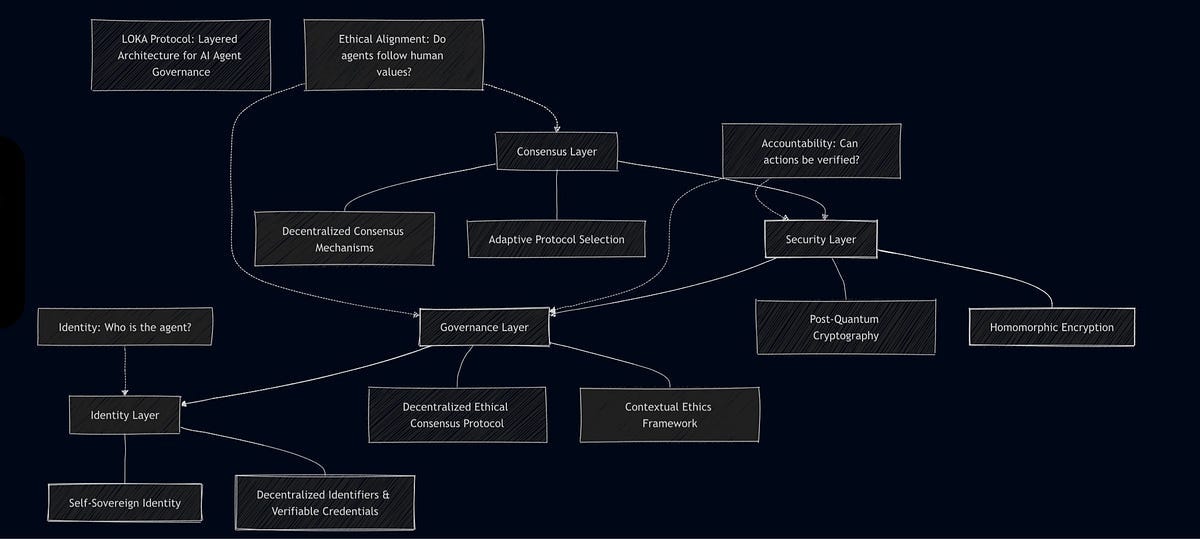
LOKA Protocol: Infrastructure for Trustworthy AI Agents #ParallelGovernance
AI agent platforms are proliferating fast. Virtuals Protocol, ElizaOS, and Fetch.ai are all in production, processing real transactions and governance decisions. Their shared approach: ethics implemented as governance layers that sit on top of the protocol. LOKA Protocol proposes something architecturally different, embedding ethics into the protocol layer itself through DIDs for agent identity, auditable action trails, and ethical constraints that enforce boundaries before agents can act, not after.
The concept echoes Asimov’s Three Laws of Robotics from “I, Robot” (1950): robots physically cannot violate ethical constraints because the laws are hardwired, not enforced after violations. In platforms like Virtuals, an agent can technically execute unethical actions and the community governs consequences through votes. In LOKA’s architecture, agents literally cannot operate outside ethical constraints. It’s the difference between laws enforced by police and physical barriers that prevent violations entirely.
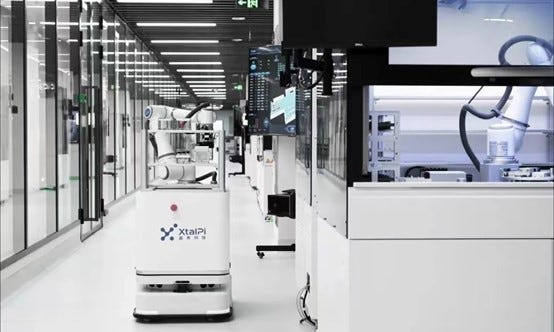
XtalPi: AI Drug Discovery Goes Mainstream #ParallelScience
XtalPi is a biotechnology company that uses AI, physics-based simulations, and lab robots to help accelerate the discovery and development of new medicines. Instead of scientists testing millions of chemicals one by one in the lab, XtalPi’s platform runs huge searches on computers to predict which molecules are most likely to work, then uses automated systems to build and test the most promising ones. This can cut years off the early stages of drug discovery and make it easier to tackle difficult medical problems.
A real example of this working is RTX-117, a small molecule drug developed by ReViR Therapeutics with XtalPi’s technology. RTX-117 is designed to treat Charcot-Marie-Tooth disease (CMT), a rare neurological condition that currently has no approved treatments anywhere in the world. In early 2026, Chinese regulators accepted the first clinical trial application for RTX-117, meaning it will soon begin human testing. This milestone makes it the first AI-developed small molecule for CMT to enter clinical trials in China and represents a major breakthrough in rare disease research.
This achievement is a big deal because finding starting drug candidates is normally slow and uncertain. By using AI to guide the search and robotics to speed up experiments, XtalPi and ReViR moved from design to clinical testing much faster than usual. It shows that combining advanced computing with biology can help create new treatments for tough diseases that traditional methods struggle with, potentially bringing hope to patients and value to investors alike.
🌍 Other Interesting News
Sid Salvi left a promising VC career to build Dimension, applying startup thinking to cancer research. Founder mode energy meets biology's hardest problems.
The Ocean Cleanup: 2025 Impact Report
27.4 million kg of trash intercepted in 2025, their most impactful year yet. The 30 Cities Program scales river cleanup globally in 2026.
Karnataka Startup Policy 2025-2030
Karnataka launches $18M program for AI, space tech, and quantum computing under its Startup Policy 2025–2030, with Anthropic confirming India expansion. Traditional cities are adopting startup city tactics to compete for global tech talent.
💡 Join Ipê Village 2026
Ipê Village 2026 will be our next large-scale experiment exploring the future of communities, cities, and governance. Hosted in Florianópolis, Brazil, in March/April 2026, this pop-up city is open to founders, builders, creators, and techno-optimists.
Follow the journey and join the community on Twitter or Discord.