
Ipê News #21 - Decentralized Infrastructure, Dunia Cyber City, DAOs in Science, and more
Your weekly update on what is happening in the Startup Society ecosystem.

Hey builders! Welcome to the 21st edition of Ipê News.
🏘️ Community Updates
What’s happening inside the Ipê ecosystem.
Welcome $IPE token
At the last Town Hall, we shared the latest updates about the Ipê Village organization and the launch of the $IPE token to track contributions and future rewards.
In a past post, we shared a detailed post on how weigh the contributions.

If you want to collaborate with the community and start earning tokens, join our Discord and introduce yourself.
🏫 Learning
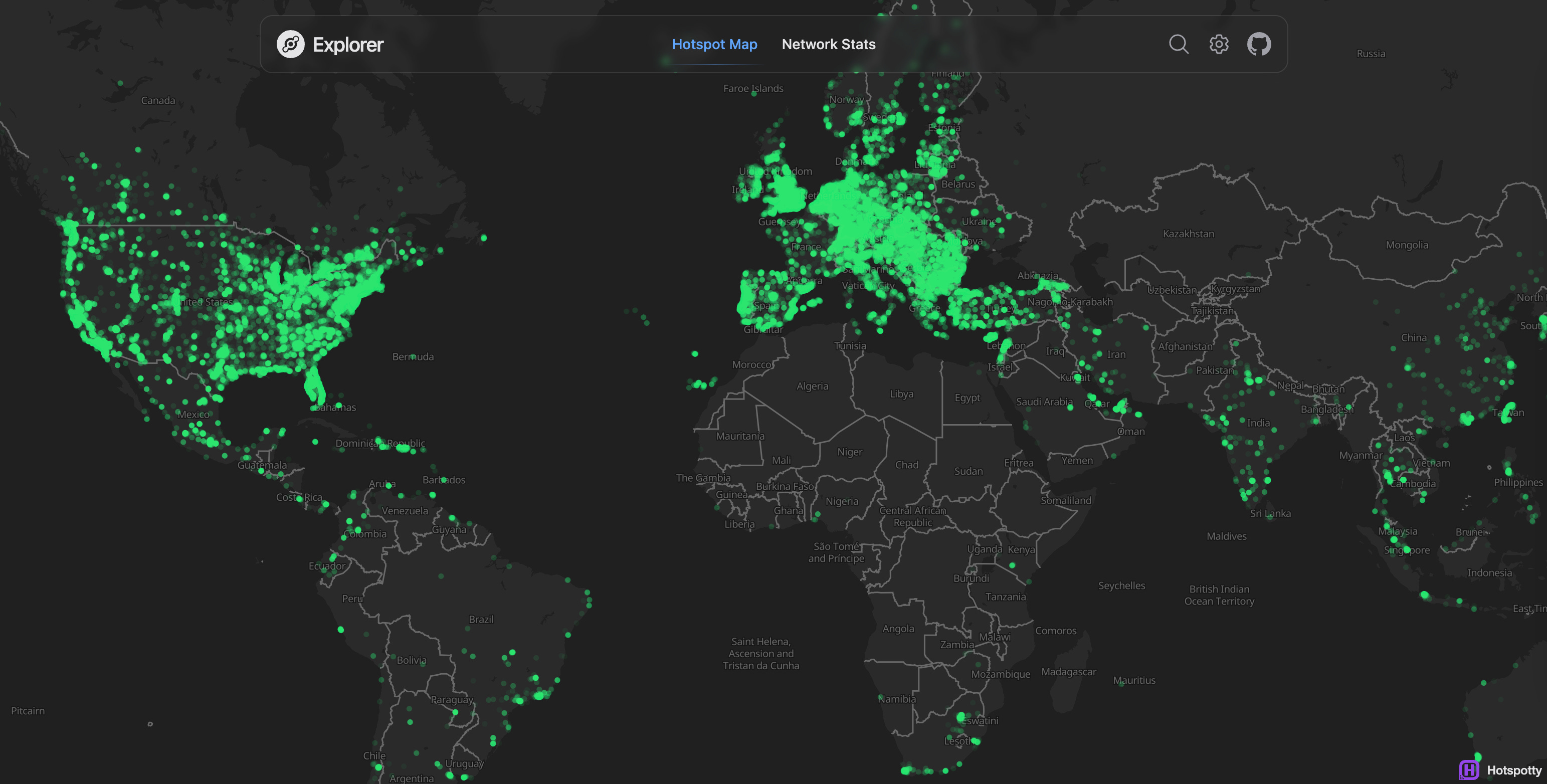
DePINs use token incentives to build and operate physical infrastructure in a decentralized way. Instead of centralized providers, individuals contribute resources, antennas for wireless networks, dashcams for mapping, GPUs for computing, or storage space and earn tokens. Networks like Helium (wireless coverage), Hivemapper (decentralized maps), and Render Network (distributed computing) show how this model can scale infrastructure organically as more participants join. For network states, DePINs offer a path to build critical infrastructure, internet, energy, computing, without relying on large corporations or governments, enabling digital sovereignty and reducing infrastructure costs. This aligns with the network state vision of communities owning and operating their own infrastructure.
🌐 Parallel Communities and Cities
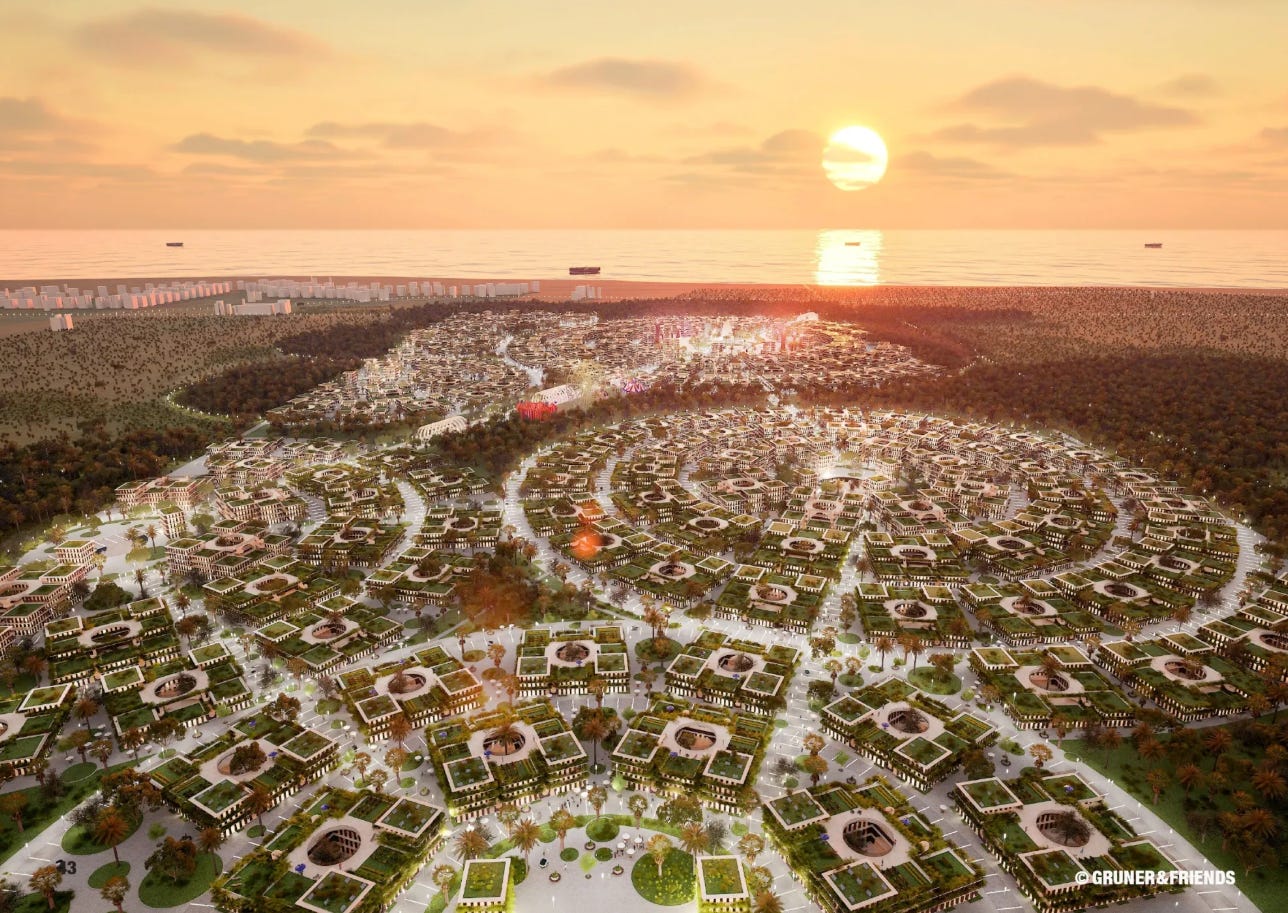
Zanzibar is making a bold bet on the network state model with Dunia Cyber City, a $1 billion initiative led by Florian Fournier, co-founder of OurWorld, in partnership with ZICTIA (Zanzibar ICT Infrastructure Agency). The project envisions a “Digital Free Zone” on the coast of Fumba, featuring privileged tax regimes: companies will enjoy complete tax exemption for ten years, while digital and physical residents will benefit from reduced income tax rates. The explicit goal is to transform Zanzibar into the “Singapore of East Africa,” attracting digital nomads, entrepreneurs, and remote workers.
Dunia Cyber City’s model incorporates fundamental elements of the network state concept proposed by Balaji Srinivasan: the city will offer virtual citizenship and digital residency, allowing community members to affiliate based on shared values and affinities rather than geographic location alone. The land concession from the Zanzibar government grants the project legal and institutional autonomy to operate under a hybrid logic combining physical jurisdiction, digital identity, and decentralized governance. This approach positions Dunia Cyber City as one of the first chartered cities on African soil with native Web3 infrastructure.
The initiative marks a significant milestone for the network states ecosystem in Africa, a region previously underrepresented in the movement. Unlike projects such as Próspera (Honduras) that faced local political resistance, Dunia Cyber City emerges with direct support from the Zanzibari government, suggesting a state-community collaboration model that could serve as a template for future startup cities in emerging markets.
🛠️ Parallel Institutions
The Max Planck Society, Europe’s most prestigious research institution, has announced a strategic partnership with Cerebrum DAO through DeSci Connect to develop workshops and decentralized research infrastructure. This collaboration marks a watershed moment for the DeSci (Decentralized Science) movement, when legacy institutions begin partnering with DAOs, the paradigm shift becomes undeniable. The DeSci ecosystem has grown to over 50 active projects in 2026, doubling since 2024, with more than $60 million in funding supporting initiatives like VitaDAO ($10M+ in longevity research) and ResearchHub (50K+ researchers).
The DeSci governance model offers a complete alternative to traditional academia: DAOs enable token-based voting on research decisions, IP-NFTs tokenize intellectual property, decentralized RFPs open proposal processes, and transparent peer review replaces editorial gatekeeping. For researchers, this means the ability to fund research directly through community support, publish without editorial gatekeepers, and earn tokens for contributions. The system creates an exit from centralized academic institutions while maintaining rigorous scientific standards.
It validates a core thesis: parallel institutions can achieve legitimacy and scale. When the Max Planck Society, an organization with 86 research institutes and 23,000 employees, engages with DAO infrastructure, it signals that decentralized coordination mechanisms have matured beyond experimental status. Building education and research programs can now leverage DeSci infrastructure to create their own scientific communities, independent of traditional university systems.
Helium Mobile has unveiled Dawn, its vision for a decentralized mobile network that challenges the monopolistic telecom model with the premise that “connectivity is a necessity, not a luxury.” The project aims to empower users and businesses with an affordable alternative to traditional carriers by leveraging community-deployed infrastructure. Dawn represents a significant evolution in the Helium ecosystem, expanding beyond IoT coverage to full mobile connectivity with 5G capabilities and decentralized broadband.
What makes Dawn particularly relevant is the exit opportunity it creates from centralized ISPs. Communities seeking digital sovereignty can now build their own connectivity infrastructure without depending on legacy telecom providers. Imagine a self-sufficient settlement with native 5G mobile coverage and decentralized broadband; this is no longer theoretical but deployable with Helium’s network. Instead of lobbying for better telecom regulation, communities can simply build their own networks.
Helium Dawn offers a turnkey solution for one of the most critical infrastructure challenges: reliable, censorship-resistant connectivity. The ability to deploy community-owned mobile networks removes a significant dependency on host country telecommunications, strengthening the autonomy that startup societies require to operate independently.
🌍 Other Interesting News
MoMA acquiring NFTs, Art Basel launching Zero 10, and artistic DAOs like Botto show digital art achieving institutional legitimacy through decentralized governance.
The micronation presents its sovereignty model at the World Economic Forum’s Abraham House, bridging alternative governance with legacy institutions.
Vitalik Buterin - We need more DAOs
Why DAOs need a second renaissance: moving beyond token voting toward privacy-preserving, human-aligned systems that can actually coordinate, govern, and scale trust.
💡 Join Ipê Village 2026
Ipê Village 2026 will be our next large-scale experiment exploring the future of communities, cities, and governance. Hosted in Florianópolis, Brazil, in March/April 2026, this pop-up city is open to founders, builders, creators, and techno-optimists.
Follow the journey and join the community on Twitter or Discord.