
Ipê News #16 - Farcaster, Dubai, JS-SEZ, and more
Your weekly update on what is happening in the Startup Society ecosystem.

Hey builders!
Welcome to our 16th edition of the Ipê News.
Reminder, you can suggest projects or interesting news to be featured.
Help us prepare Ipê Village 2026 and join our Discord Server.
🏘️ Community Updates
Highlights from Ipê City, partner communities, or aligned initiatives.
The next Ipê Town Hall will host the founder of P2P.me, on Tuesday, Dec 16, to explain his experience as an Ipê Architect and P2P’s progress since. With coins.me, the easiest USDC-to-fiat platform targeting emerging markets, they’re now eyeing a token generation event next year, for governance handover and reaching more markets.
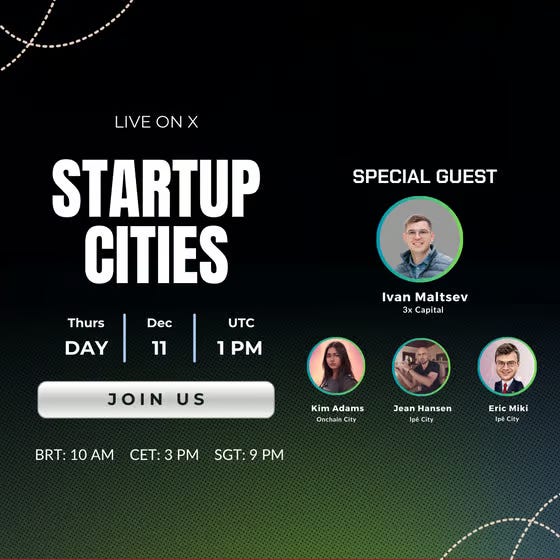
But before that, you might want to tune in to the Startup Cities Live on Thursday, Dec 11, with a special guest: Ivan Maltsev, GP at 3X Capital, and CEO at Nomadz, the community-driven platform for travelers on Solana.
🏫 Learning section
A learning segment to upskill and be able to build the tools of the future.
You may have heard of Farcaster and thought it was the crypto version of Twitter. However, Farcaster is an open-source protocol for building sufficiently decentralized social networks: the Twitter alternative is only a Farcaster client (like The Base App).
It stores your identity on Ethereum, uses an EVM wallet, and stores messages on hubs (decentralized nodes). The protocol supports mini-apps, a marketplace, and even rewards for the builders of the most popular apps. A unique feature of Farcaster is the frame, programmable post, so you can embed any application in a post.
And this month, an update is coming with Frames v2, where posts become app-like with advanced interactivity. With battle-tested tip and reward systems, more than a million accounts, and 50,000+ daily users, this is a great place to build social apps.
🌐 Network Societies Update
A quick pulse on emerging cities, nomad groups, and experiments shaping the future of network societies.

Dubai is quietly becoming the crypto capital of the world, attracting major companies and events like Token2049 or Solana Breakpoint. VARA’s (Virtual Assets Regulatory Authority) regulatory clarity went a long way, and that’s how a city in the desert attracted thousands of web3 businesses.
At the heart of Dubai is the DIFC (Dubai International Financial Centre), operating independently from the ADGM (Abu Dhabi Global Market), but under the federation of the UAE (United Arab Emirates). Each emirate can release its own rules, allowing Dubai to build more than 40 Free Zones, providing different benefits and driving Foreign Direct Investment.
Dubai shows network state builders that jurisdictional innovation is already happening. You can prototype new governance models inside zones, attract global talent fast, and turn governance experimentation into real success.
⚖️ Governance Tools
Exploring mechanisms for coordination, decision-making, and digital governance.
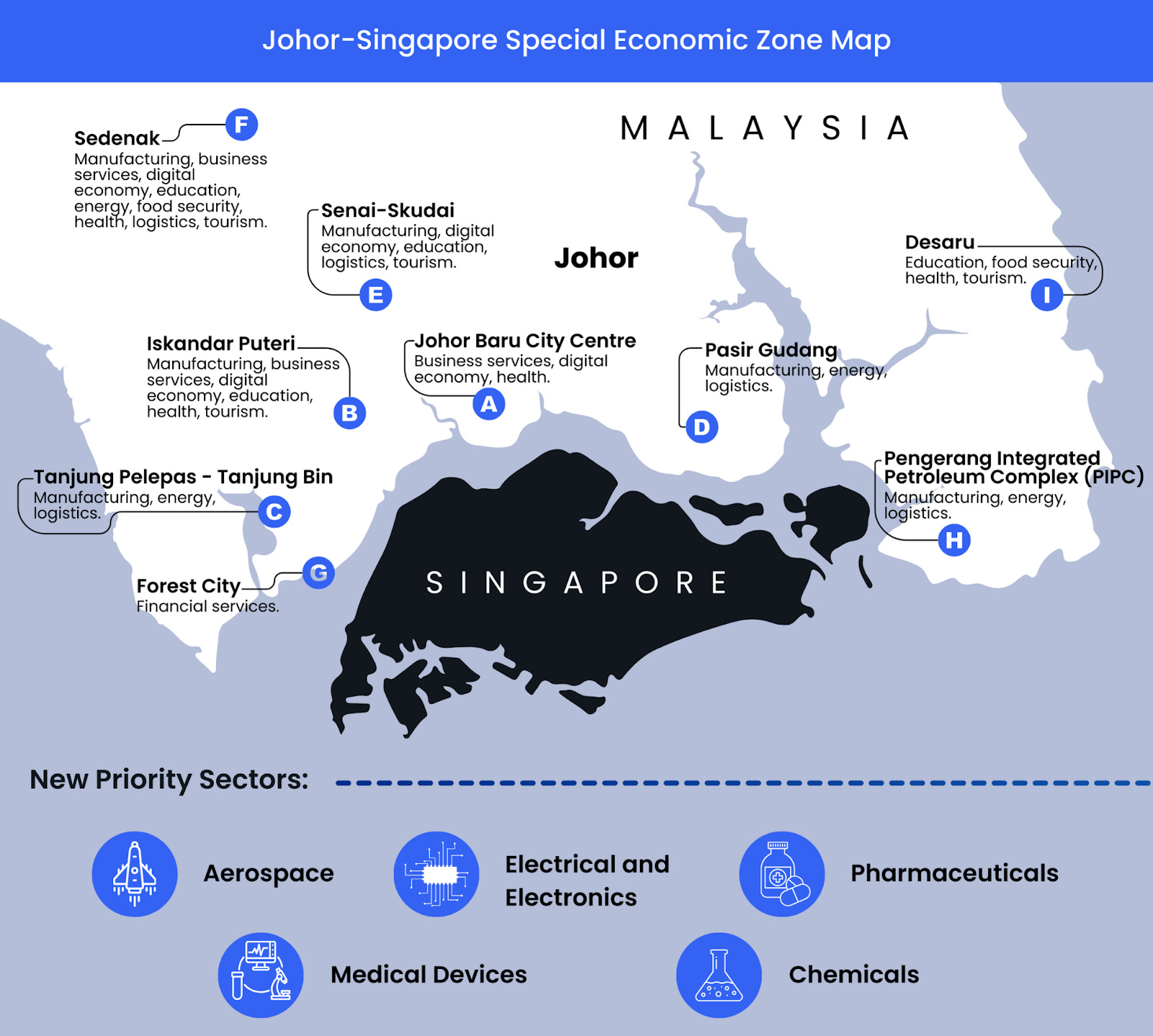
The Johor-Singapore Special Economic Zone: Cross-Border Governance Innovation
After starting a new zone a year ago, Singapore and Malaysia just reaffirmed their commitment to developing the JS-SEZ for companies to leverage the Singaporean financial infrastructure and the Malaysian territory. The hub has already received the interest of 300 companies to start new R&D and manufacturing plants.
The zone will improve immigration between the two countries, simplify the customs procedures, and streamline business processes in order to attract more talent to the area. They plan to attract more than 100 projects and create 20,000 jobs in 11 key sectors over the next decade.
If you’ve been paying attention, you might remember a small island called Forest City in that area, which is home to the Network School. Providing tax incentives, operational efficiency, and a strategic location, this is the best location for building the future of network states.
🛠️ Web3 Tools
Tech shaping decentralized living, finance, and identity.
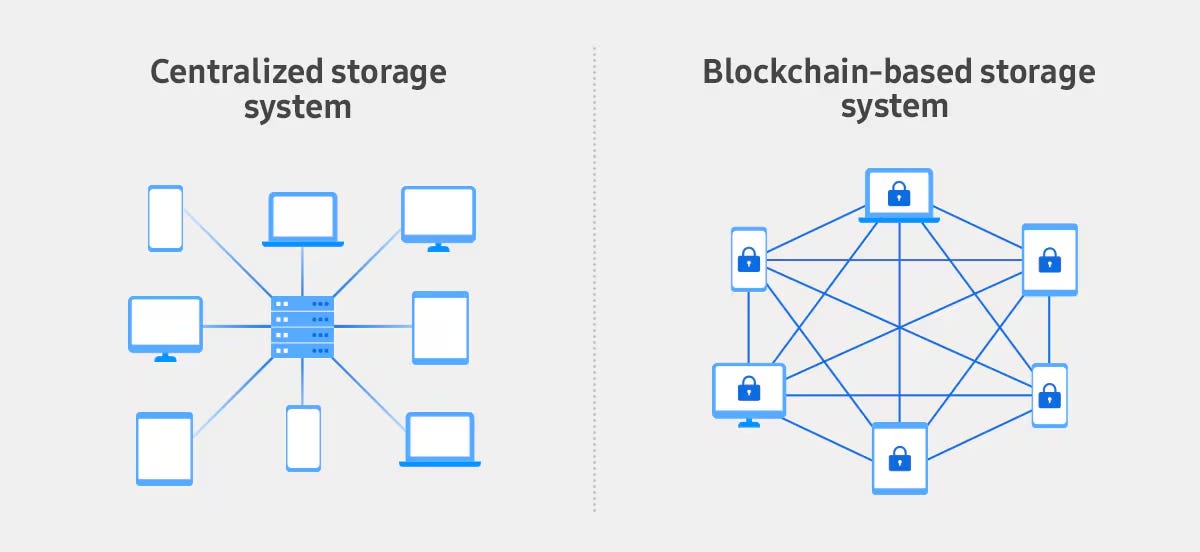
Web3’s dependence on centralized infrastructure providers like AWS shows a great irony: decentralized apps run on centralized servers. But it doesn’t have to be. The decentralized storage stack now includes multiple mature solutions.
Arweave offers permanent storage with a one-time payment model, ideal for immutable records. IPFS (InterPlanetary File System) provides a decentralized, peer-to-peer protocol for storage. Ceramic Network enables mutable decentralized data storage for dynamic content, while Sia offers competitive pricing through peer-to-peer storage contracts. More recently, Filecoin’s new “Filecoin Pin“ tool complements IPFS by enabling persistence backed by onchain proof that storage providers continue serving data daily.
For network states, storage independence is a critical piece of infrastructure. Traditional cloud providers can censor, surveil, or arbitrarily raise prices. Decentralized storage isn’t just ideological anymore, and no autonomous community should build without it.
🌍 Other Interesting News
Broader movements and stories from the frontier of digital-first governance and societies.

Kalshi is now worth $11 billion after a $1 billion Series E funding round, making Luana Lopes Lara the world’s youngest self-made woman billionaire. But is it the most important part? A young Brazilian woman created the first CFTC-regulated prediction market platform in the US, succeeding where many others failed.
The true edge of Kalshi was to fight for regulation, and eventually sue the CFTC to get approved. And they’re still playing the regulation game. Building new mechanisms on Solana in a hostile environment with strong competition is no easy feat.
Prediction markets and futarchy are growing trends, as part of what some call the Perpification of everything, and they will play a key role in the development of Network States and their governance mechanisms. If you’re interested in building on top of Kalshi, check their $2M grant program.

💡 Join Ipê Village II
Ipê Village 2026 will be our next large-scale experiment exploring the future of communities, cities, and governance. Hosted in Florianópolis, Brazil, in March/April 2026, this pop-up city is open to founders, builders, creators, and techno-optimists.
Follow the journey and join the community on Twitter or Discord.